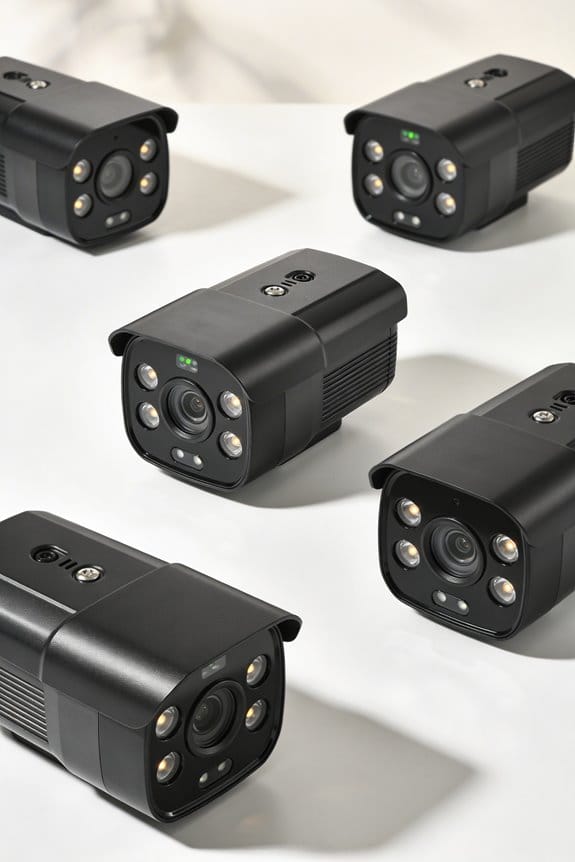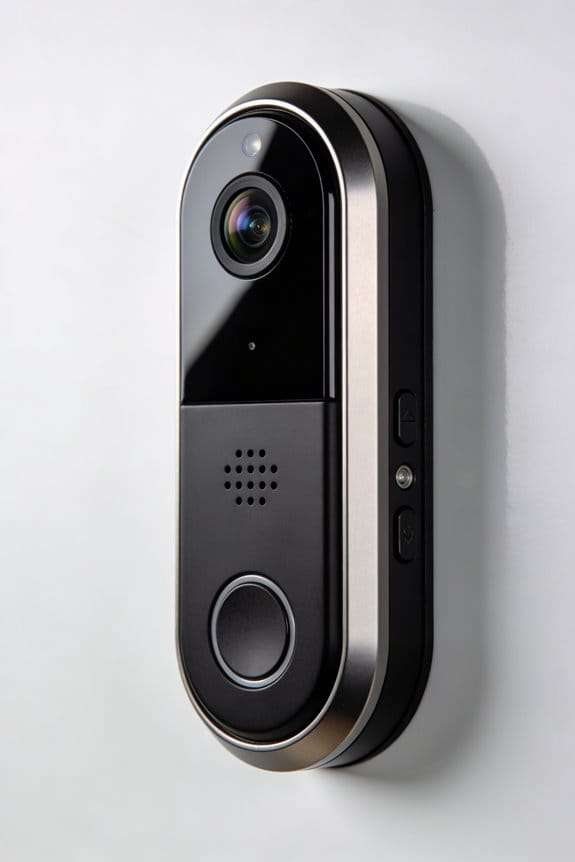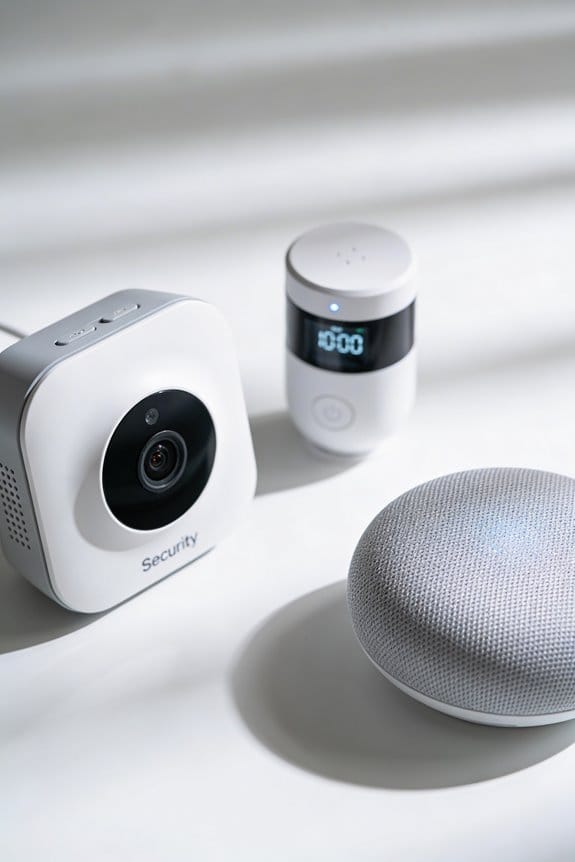
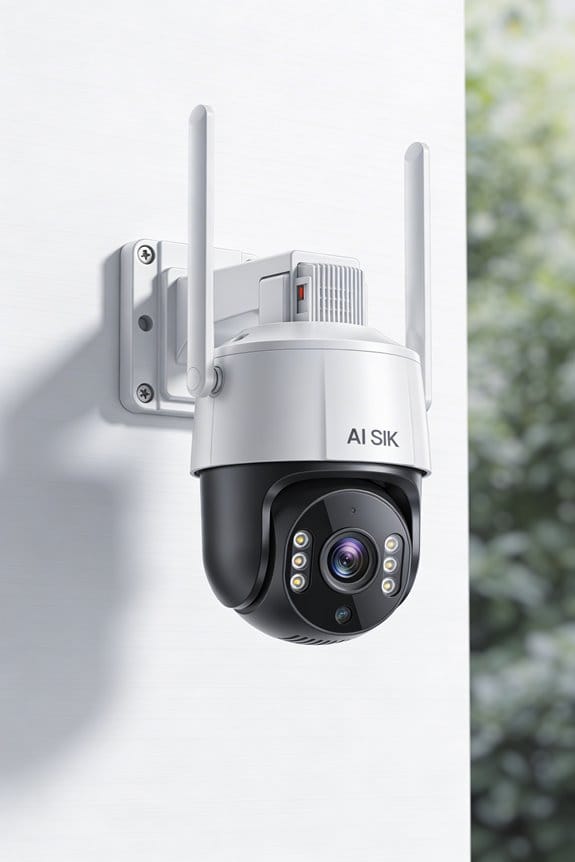

Smart security cameras use AI to enhance person detection by employing advanced algorithms and machine learning. They analyze video feeds in real-time, distinguishing human movements from background activity. This reduces false alarms markedly—by up to 90%—and allows for immediate alerts about suspicious behavior. We find that AI’s capability to learn from diverse visual data helps improve accuracy over time. This technology not only improves surveillance but also makes our environments safer. Discover further functionalities as we explore more.
Key Takeaways
- Smart security cameras utilize AI algorithms to analyze video footage for real-time person detection, significantly reducing false alarm rates.
- Convolutional Neural Networks (CNNs) enhance object recognition capabilities, allowing cameras to identify and track human movements accurately.
- The AI training process incorporates diverse datasets of labeled images and videos to improve recognition of various human scenarios.
- Edge processing enables immediate alerts by analyzing data locally, ensuring user privacy while enhancing real-time surveillance capabilities.
- AI systems generate contextual alerts, differentiating familiar faces from unusual behavior, which improves response times to potential threats.
How Smart Security Cameras Operate
You may be interested
Have you ever wondered how smart security cameras actually work? It’s pretty cool when you dig into it. These cameras are packed with advanced sensors and artificial intelligence that allow them to capture video footage in real-time. They use AI algorithms and video analytics to analyze what they see, which means they can identify humans, vehicles, and other objects. This is especially important for detecting potential intruders.
Here’s the trick: smart security cameras learn typical behavior patterns in their surroundings through machine learning. By doing so, they provide more accurate security assessments, which cuts down on those annoying false alarms. You can really start to trust the alerts you get, knowing they are based on actual observations. Plus, features like facial recognition take their surveillance capabilities to the next level, making them incredibly useful in keeping an eye on things and ensuring your safety.
The best part is, you don’t have to do much to enhance their performance. Keeping your camera software updated can really boost its AI capabilities. Many top models now include AI motion detection and customizable alert zones to focus on meaningful events and reduce unnecessary notifications.
The Limitations of Traditional Motion Detection Methods
Have you ever been bombarded with motion alerts when all that’s happening is a passing car or a rustling tree? It can feel frustrating, can’t it? Traditional motion detection methods just don’t cut it anymore. They mostly depend on pixel changes between video frames, which makes it hard to tell what’s really important from all the background noise. This often leads to a bunch of false alarms that cause alert fatigue. When you’re constantly getting pings on your phone, it’s no wonder you start ignoring them, risking missing an actual security issue in your surveillance footage.
Here’s the kicker: if these systems are going off all the time, it’s not just annoying—it can also get expensive. Think about it. Security teams have to pay people to watch those alerts and respond. That means longer response times and higher labor costs. Who wants that?
So, why does this matter? As we move further along in tech, it’s becoming clear that we need something smarter. AI-powered solutions can actually sort through the important information and help make sense of it all. This means fewer unnecessary notifications and a better chance of catching real threats.
The best part is, embracing these smarter tools means reducing our reliance on watching screens all day. Instead of manually monitoring everything, you get systems that help pinpoint the real movements that matter. It’s about time we looked for better solutions to this age-old problem.
In fact, many advanced outdoor cameras use AI motion detection technology that reduces false alarms by up to 95%, making your alerts far more meaningful.
In short, traditional motion detection methods just aren’t doing the job anymore. If you’re tired of false alarms and want more reliable security, it might be time to consider some advanced technology. What do you think—are you ready to step up your security game?
Recommended Products
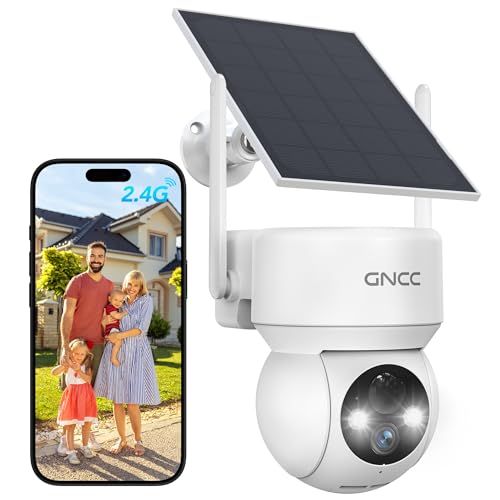
【360° Full View with Color Night Vision】The camera for home security features crisp 1080P Full HD resolution, offering a 355° horizontal and 90° vertical rotation range to eliminate blind spots in yards, driveways, and entryways—capturing sharp details like license plates day and night. Advanced color night vision technology delivers vivid, accurate colors even in low-light conditions. With the Osaio app, you can access live or recorded videos anytime, anywhere.

Advanced AI Detections: Unlock advanced detection capabilities! Now, in addition to basic motion sensing, you can effortlessly identify people, vehicles, pets, and packages.

4K ULTRA HD CLARITY: Experience 4× the resolution of standard 1080p for sharper images and finer details. Capture license plates, small objects, and more
Enhancing Detection Accuracy With AI
As we’re all trying to keep our spaces safe and secure, the challenge of detecting actual threats is real. Have you ever faced a situation where the alarm goes off but it turns out to be nothing? Well, there’s a better way to handle this—AI is stepping in with some impressive advancements in person detection, leading to far fewer false alerts. With the help of advanced object recognition algorithms, which use Convolutional Neural Networks, our devices can sift through visual data at various levels. This means they’re getting better at spotting humans, even when visibility isn’t great.
One of the standout features of this tech is real-time analysis, particularly with edge computing. This means you’ll get alerts right away without waiting for cloud processing, which can seriously slow things down. When the system is trained on a massive collection of labeled images, it starts to recognize patterns and adapt to various human behaviors. So, whether it’s someone walking through a parking lot or lingering in a restricted area, these alerts are becoming more precise and helpful.
If you’re looking to set up something like this, here are a couple of tips that can make all the difference:
- Train your systems with a diverse range of visual data—this helps the AI see many scenarios.
- Use edge computing for quicker responses so you won’t miss anything important.
So, why does this matter? Implementing these strategies not only enhances how aware you are of your surroundings, but it also speeds up how quickly you can react to potential security threats. That’s a win in anyone’s book!
Modern systems often integrate with AI motion detection features to reduce false alarms while increasing detection reliability.
In the end, we’re not just trying to catch people; we’re trying to improve overall safety and peace of mind. Think about how much more confident you’d feel knowing your security system is sharp and reliable. What do you think?
Recommended Products

AI Motion Detection 2.0 – Driving AI to the next level, human&vehicle detection and flexible detection area are more accurate than before. For quicker locating in crucial moments, human&vehicle smart searching in recordings offers you great help.

AWARD-WINNING HOME SECURITY: The Tapo C615F KIT was rated WIRED's Best Budget Floodlight Camera in 2026 for its impressive features at a value, including pan/tilt control, convenient solar charging, and subscription-free AI detection.

Home Camera w/ Free Al detections: Finally, a home indoor security camera supports free local detection of person/pet/baby crying with no subscription fees. Spend an extra $10 Now and save $100 Later! Why pay $10/mth when our AI detection is FREE? (Note: only AI detection is free; cloud storage comes with a monthly fee.)
Understanding Neural Networks Behind AI Detection
Have you ever wondered how those AI systems figure out if there’s a person in your photos? Let me break it down for you: it all comes down to something called Convolutional Neural Networks, or CNNs for short. These incredible tools analyze images in a way that mimics how our brains process visuals, chopping them down to their basics so they can spot humans effectively.
Now, there are a few key things that can really boost how well these networks perform:
- Training Datasets: It’s essential to use extensive and diverse datasets. The more different human actions and settings the CNNs get to see, the better they become at recognizing various human figures.
- Quality Matters: Never underestimate the importance of high-quality data. If the data you feed into the system isn’t varied enough, the performance can really suffer.
- Predict-and-Correct Mechanism: This is like the CNN’s secret weapon. By continuously refining their predictions, these networks get better at piecing shapes together—even when conditions aren’t ideal.
So, why does all this matter? It’s about making those AI detection systems smarter and more reliable over time. Truth is, with the right data and techniques, these tools can tackle even the most tricky recognition scenarios.
In fact, many smart security cameras, like the ZOSI C298 SE, incorporate AI detection to distinguish humans from other objects to reduce false alarms and improve accuracy.
In short, understand these elements, and you’ll be well on your way to enhancing AI detection. What are your thoughts on the future of AI in image recognition?
How AI Trains to Detect People
When you think about training AI to detect people, it’s really all about the data and how you handle it. For a lot of AI models, especially those based on Convolutional Neural Networks (CNNs), the goal is to break down an image into basic elements like edges and colors to spot human figures. To make this work well, you need a huge pile of training data—think labeled images and videos of people in all kinds of situations, even the tough ones.
Here’s the trick: the training process involves a predict-and-correct loop. The AI makes a guess, and then it gets feedback, which helps it refine its predictions. This is crucial because it directly impacts how many mistakes, or false positives, the AI makes. And let’s be honest, nobody wants a system that can’t tell the difference between a person and a shadow.
So, why does this matter? It all comes down to the quality and variety of your training data. A rich dataset means that the AI can learn more effectively and become more reliable in real-world scenarios. If you’re working on similar projects, consider how diverse your data is. Many top smart home security systems use AI-powered detection systems to differentiate between people, packages, and vehicles, significantly reducing false alerts.
Edge vs. Cloud Processing: Which Is Better?
Have you ever thought about how cameras could boost security, but then found yourself juggling all those tech options? The debate between edge and cloud processing for security cameras is one topic that keeps coming up.
Edge processing is pretty interesting. It analyzes video data right where it happens, which means you get real-time alerts without the lag. Plus, it keeps your footage secure by storing it locally, so you get a bit more privacy.
On the flip side, there’s cloud processing. This one uses powerful remote servers to run advanced analytics. You might find it improves accuracy and helps with things like behavioral analysis. But, here’s the catch: you could end up waiting a bit longer for that data to travel back and forth.
So, what’s the takeaway? You’ll need to consider the speed and privacy advantages of edge processing against the more advanced analytic tools in cloud processing. Finding that sweet spot is key to fitting your security needs with what your hardware can handle. Each option has its upsides, and the best choice really depends on your specific situation.
It’s definitely worth taking some time to think about what works best for you. What do you think would fit your surveillance needs better? Keep in mind that high-resolution cameras with strong AI detection capabilities are essential for minimizing false alarms and improving security accuracy.
Recommended Products

𝟒𝐊 𝐔𝐥𝐭𝐫𝐚-𝐂𝐥𝐞𝐚𝐫, 𝟐𝟒/𝟕 𝐑𝐞𝐜𝐨𝐫𝐝𝐢𝐧𝐠 | Capture every detail, day or night, with crystal-clear 4K recording. Stay connected with family, baby, nanny and pets using the built-in two-way audio for real-time communication.
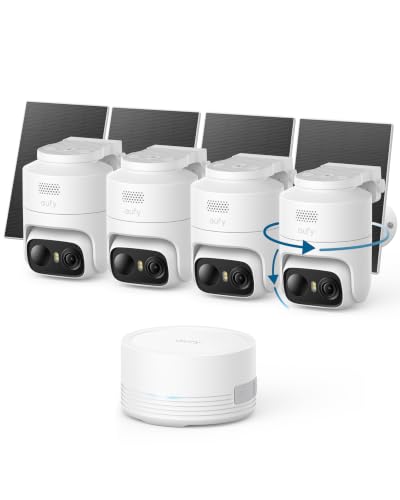
𝟑𝟔𝟎° 𝐀𝐈 𝐓𝐫𝐚𝐜𝐤𝐢𝐧𝐠 𝐰𝐢𝐭𝐡 𝐏𝐚𝐧 𝐚𝐧𝐝 𝐓𝐢𝐥𝐭: Deliver 360° property coverage and eliminate blind spots with a single camera. Auto-tracking keeps subjects perfectly centered, providing ultimate home protection. NOTE: For smooth operation of your eufyCam C37, please update your eufy App to version 6.0.10 or newer.

𝐏𝐮𝐫𝐞𝐂𝐨𝐥𝐨𝐫 𝐍𝐢𝐠𝐡𝐭 𝐕𝐢𝐬𝐢𝐨𝐧 𝐋𝐢𝐤𝐞 𝐃𝐚𝐲𝐥𝐢𝐠𝐡𝐭: Capture vivid, full-color video even in near-darkness. With an f/1.2 aperture and BSI sensor capture 2.8× more light for crisp. No harsh spotlights to wash out faces or license plates. Check on your baby or elderly loved one without waking anyone. See everything outside in true-to-life color—just as your eyes would in daylight.
Why AI-Powered Person Detection Matters for Security
Why is AI-powered person detection becoming essential for modern security systems? You ever felt that dread when you hear a noise outside? It’s stressful, especially when you’re not sure if it’s just the wind or something more concerning. That’s where AI steps in. With smart security cameras that use advanced algorithms, these systems can tell the difference between human movements and random activities. This smart tech helps cut down on those pesky false alarms that keep you on edge.
Here are some great perks of AI person detection that really matter:
- Real-time alerts: You’ll get notified instantly, which can really boost your response time when it counts.
- Contextual alerts: It doesn’t just tell you there’s something going on; it can let you know if it sees someone familiar or if there’s unusual behavior.
- Detection accuracy: Whether it’s dusk or the view’s a bit blocked, these systems stay reliable.
The best part is that these AI systems don’t just sit there. They keep learning from different data sources, improving their detection skills over time. This constant refinement means you can feel more secure, knowing your video surveillance is doing a better job.
Truth is, AI-powered person detection changes how we think about safety. It enhances our security systems, making sure they’re not just effective, but trustworthy, too. Additionally, features like intelligent human detection in cameras such as the eufyCam 2C help reduce false alerts significantly. Next time you hear a noise outside, wouldn’t it be nice to not have to worry?
AI Security Cameras: Enhancing Situational Awareness With Alerts
Have you ever missed an important moment because you weren’t aware of what was happening outside? AI security cameras are a fantastic tool to help you stay in the loop, especially thanks to their alert systems. Imagine getting a notification that says “person at the front door” while you’re busy doing something else. This lets you check in on what’s happening without having to constantly look at a screen.
One of the best parts is that these smart cameras really cut down on false alarms—up to 90%! That means you’re less likely to jump at every little noise, only reacting to real potential threats. Plus, with those cameras tracking familiar faces, it’s much easier to tell who’s supposed to be there and who’s not. This kind of feature can save you a lot of worry.
So, why does this matter? Well, behavioral tracking on these cameras can also spot unusual activities that might raise red flags. Instead of just checking in sporadically, you can have peace of mind knowing your home is being monitored closely. And let’s face it, in today’s world, keeping a keen eye on our surroundings has never been more crucial.
Here’s the trick: make sure to customize your alerts. Tailoring them to your specific needs can help you stay proactive rather than reactive.
To sum it all up, AI security cameras can really boost your situational awareness by keeping you informed about what’s happening around your home. Modern devices also offer customizable motion detection that reduces unnecessary alerts for a more focused security approach. What features would make you feel more secure?
Recommended Products

Advanced AI Detection: Benefit from cutting-edge AI technology that accurately identifies people, pets, packages, and vehicles, enhancing the relevance of notifications and reducing false alarms.

2K ULTRA-CLEAR VIDEO THROUGH GLASS - See your front door, yard, and driveway in stunning 2K 3MP resolution. The 108° wide-angle lens and 3X digital zoom capture every detail, while the starlight sensor keeps footage in full color even in low light—no grainy black-and-white night vision.

COMPACT, VERSATILE, WEATHERPROOF: The Tapo C121 is a compact camera suitable for indoor and outdoor use, featuring an IP66 rating for withstanding rain, dust, and rugged conditions.
How to Choose the Right AI Security Camera for You?
Choosing the right AI security camera can feel like a daunting task, right? With so many options out there, it’s easy to get lost in all the specs and features. Start by looking at how well the camera can detect people—top models boast over 99% accuracy, which means you’ll get fewer false alarms buzzing at all hours. The best cameras come packed with smart AI features that can alert you in real-time and even recognize faces or license plates.
Recommended Products
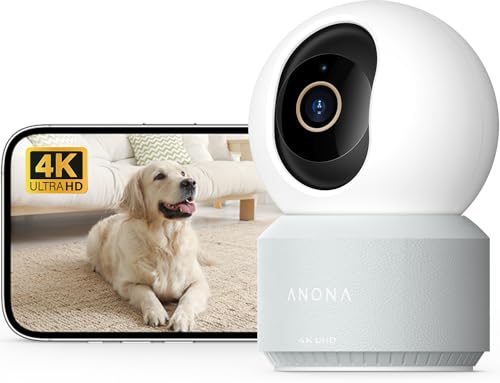
【Stunning 4K UHD & 8x Zoom】 Capture tiny details and record 4K ultra-clear videos day & night with the Anona 4K indoor camera, say goodbye to 2K or 3K. The professional-grade lens and 8X zoom bring distant details into sharp focus, so you never miss some wonderful moments.
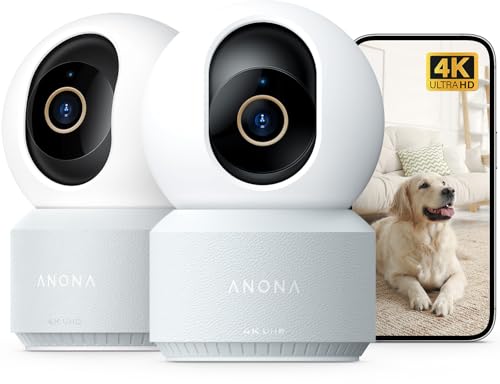
【Stunning 4K UHD & 8x Zoom】 Capture tiny details and record 4K ultra-clear videos day & night with the Anona 4K indoor camera, say goodbye to 2K or 3K. The professional-grade lens and 8X zoom bring distant details into sharp focus, so you never miss some wonderful moments.
Pro Tips:
- Try this: Check for customizable features where you can set activity zones and adjust sensitivity settings. You want something that fits your specific security needs.
- Privacy matters. Edge AI systems process data right where the camera is installed, which adds a layer of privacy. However, keep in mind that they might not analyze as deeply as cloud-based systems.
- Updates are key. Brands that promise regular updates can seriously enhance the effectiveness of detection over time, so look for those commitments.
- Also, consider systems with Smart Motion Detection capabilities to minimize false alerts and improve monitoring efficiency.
Frequently Asked Questions
Can AI Cameras Work Effectively in Low Light Conditions?
Absolutely, AI cameras with advanced low light performance excel in nighttime scenarios. Utilizing night vision, infrared technology, and image processing, they adapt to lighting conditions, ensuring visual clarity, noise reduction, and enhanced motion sensitivity for ideal camera placement.
How Do AI Cameras Handle Pet Movements?
AI cameras excel at pet movement recognition through animal behavior analysis, enabling false positive reductions. With adjustable motion sensitivity settings and training data diversity, they effectively manage multi-pet detection both indoors and outdoors, even considering specific breed recognition and wardrobe changes.
Are There Privacy Concerns With AI Person Detection?
Yes, there are privacy implications with AI person detection. We must consider data storage, consent requirements, and legal regulations. Transparency in user notifications and security measures helps address public perception and surveillance ethics amidst technological advancements.
Do AI Security Cameras Require Constant Internet Access?
When it rains, it pours; unfortunately, most AI security cameras need constant internet access for cloud storage and remote access. Yet, some models offer offline functionality, ensuring video quality and essential security features continue uninterrupted.
How Often Do AI Detection Algorithms Need Updates?
AI detection algorithms should be updated regularly, often quarterly, to enhance algorithm performance. Frequent updates incorporate user feedback and training data, improving accuracy and reducing false positives through software maintenance and security patches, along with feature upgrades.