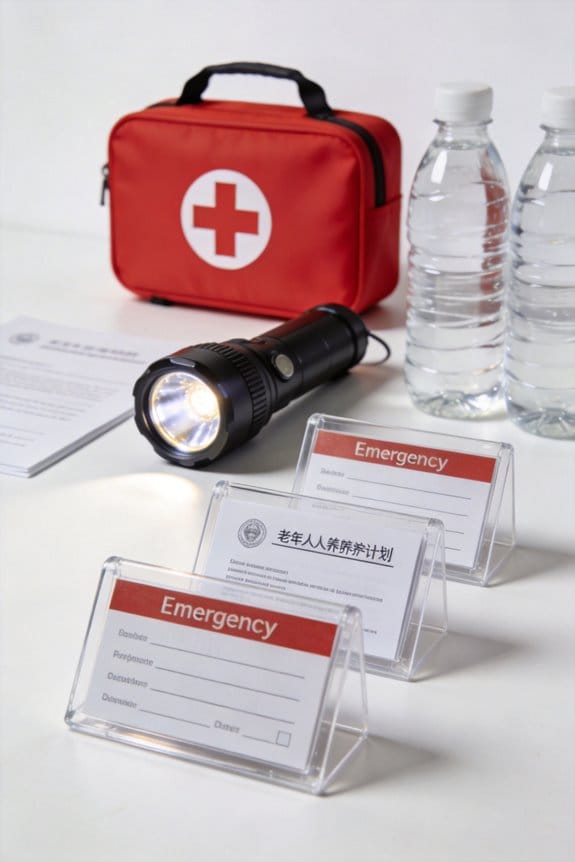

Creating emergency preparedness plans for elderly family members is vital. We need to understand their specific needs, like mobility issues and medical conditions, to guarantee their safety. Let’s gather essential supplies, including medications and food that meets dietary restrictions. Establishing a reliable support network is important, as it helps provide assistance during emergencies. Regularly practicing evacuation routes and communicating our plans will keep everyone informed. By improving our understanding, we can better prepare for unexpected situations.
Key Takeaways
- Assess the specific medical conditions and mobility needs of elderly family members to tailor the emergency plan accordingly.
- Develop a reliable communication plan with emergency contacts and an out-of-state check-in person.
- Prepare individual emergency supply kits that include essential medications, food, and personal items for seniors.
- Practice evacuation routes regularly to ensure elderly family members are familiar and comfortable with the plan.
- Engage seniors in community preparedness activities to enhance their confidence and overall readiness for emergencies.
Understanding the Importance of Emergency Preparedness for Seniors
When it comes to preparing for emergencies, many of us worry about our older family members. They often have specific challenges—think health issues, mobility hurdles, and sometimes even cognitive difficulties. So, how do we make sure they’re ready for anything that comes their way? Creating an emergency plan is a solid start. It helps them understand what to do during situations like needing to evacuate or finding a safe place to stay.
One thing to keep in mind is the value of a good support system. This isn’t just about having family nearby, but also caregivers who can step in when things get tough. Engaging seniors in community preparedness efforts can really make a difference. It gives them a sense of control and helps build their confidence in dealing with emergencies.
Here are some quick tips:
- Include seniors in the planning process. They know their needs better than anyone else.
- Make it a habit to review the emergency plan regularly to keep it fresh in their minds.
So, what are some practical steps to follow? Have regular discussions about the plan and practice it together. Frankly, knowing they have a solid plan in place can provide not just peace of mind for you, but for them as well.
At the end of the day, preparing for emergencies isn’t just about the supplies or the plan; it’s about ensuring our loved ones feel safe and capable. Utilizing FEMA-compliant supplies can ensure their survival needs are met effectively. So, is your emergency plan set? It’s worth the effort to keep your elderly family members as safe as possible.
Identify Risks and Special Needs for Senior Safety

Have you ever thought about how quickly things can change during an emergency, especially for older adults? It’s something we need to get serious about. Preparing our loved ones for unexpected situations means identifying their specific risks and special needs when it comes to safety.
When it comes to mobility, think about this: older folks living in multi-story homes might have a tough time getting out during an emergency. It’s crucial to figure out some alternative escape routes—maybe even consider moving crucial supplies closer to safe exits.
Then there’s the issue of medical needs. You don’t want to be caught off guard, right? Make sure any emergency plans include a good stockpile of medications and keep in mind any special diets for at least 30 days. That way, they’ll be ready for whatever comes their way.
Support networks are another big piece of the puzzle. Having reliable family and caregiver support during crises can go a long way to ensuring safety and peace of mind. So, think about who’s around to lend a hand. Do you have neighbors who could help?
I mean, the reality is that these simple steps can make a world of difference. So, are you ready to take action? Remember to keep your loved ones’ specific needs in mind, and think about what could happen in your area.
In short, preparation is key to helping older adults stay safe. Using motion detection technology can also enhance monitoring during emergencies to alert caregivers promptly. What steps will you take today to ensure their safety in an emergency?
How to Create Your Family Emergency Plan
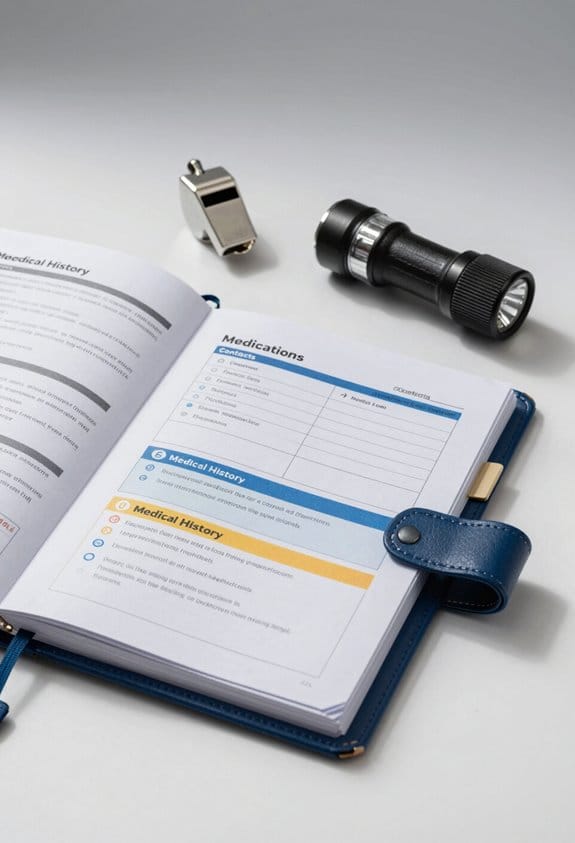
Emergency situations can hit hard when we least expect them, and that’s why having a solid plan for our older family members is crucial. Start by figuring out what they truly need, like any medical conditions they have or if they have trouble getting around. Think about a communication plan too—write down emergency contact numbers and don’t forget to include an out-of-state contact. It’s good to have someone who can check in on them during a crisis.
You won’t want to overlook putting together individual emergency supply kits for them. These should cater to their specific needs and include things like medications, favorite snacks, and any other essentials they may use regularly. Practicing evacuation routes is also really helpful; it’ll make your loved ones feel more at ease when emergencies arise.
Finally, don’t forget to build a solid support network. Get family members, friends, and caregivers involved, so they know who to reach out to when they need help. With all these elements covered, you’ll be well on your way to creating a resilient emergency plan for your loved ones. Including a kit with emergency medical components tailored to their health needs can make a critical difference.
Pro Tip: Make it a point to review your plan every year—it’s just a smart move. What steps have you taken to prepare your family for unexpected situations?
Gather Essential Supplies for Your Emergency Kit
Gathering essential supplies for an emergency kit can feel overwhelming. But when you think about it, having a well-stocked kit can mean the difference between comfort and chaos during unexpected situations. Here’s a quick list of must-haves that everyone should consider including:
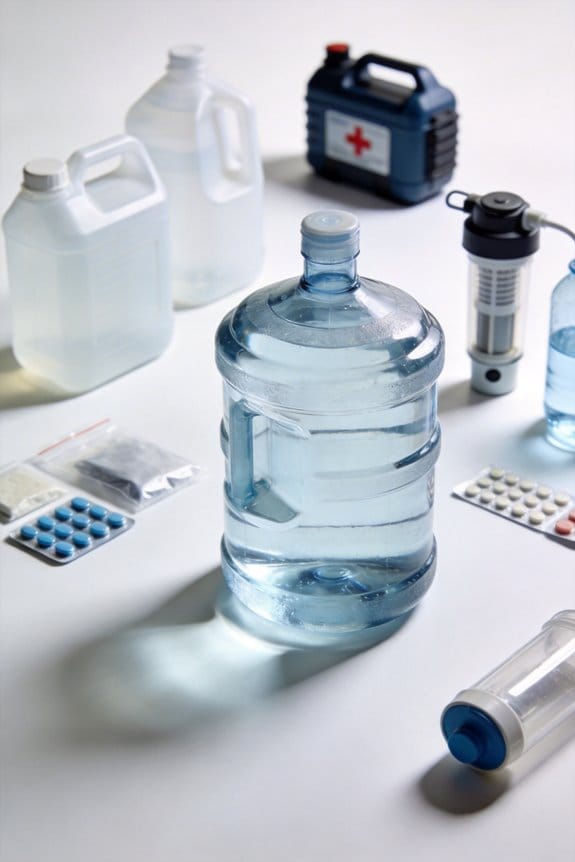
- Water: Aim for at least one gallon per person per day for three days.
- Food: Think about ready-to-eat items like canned goods, protein bars, or even some freeze-dried meals.
- First Aid Kits: You shouldn’t skip on sterile gloves, adhesive bandages, and antibiotic ointments for those little injuries that always pop up.
- Medical Supplies: If you have elderly family members, don’t forget to pack any special requirements—extra medications or mobility aids can be lifesavers.
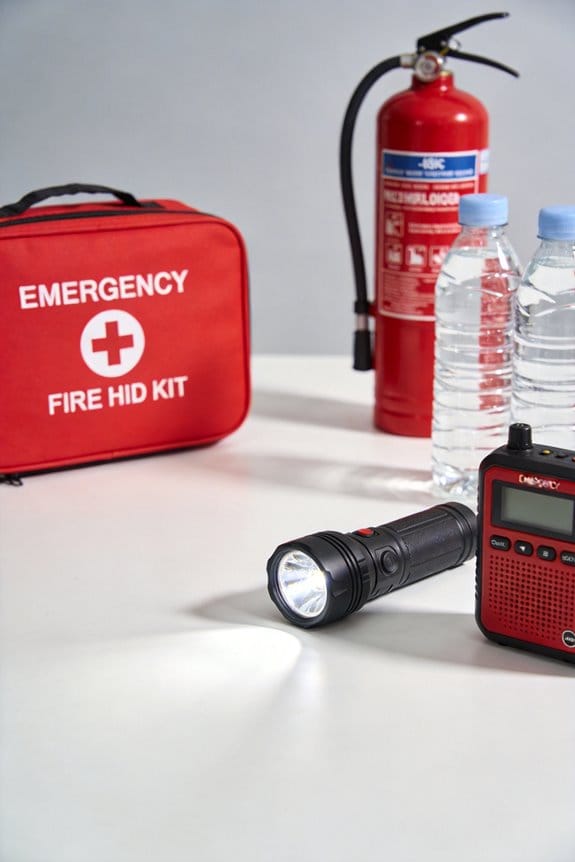
- Emergency Radio: A battery-powered NOAA Weather Radio ensures you’re alerted to any weather emergencies.
Now, you might be thinking, “Why is this even important?” Well, having these supplies helps you feel secure and ready for anything that may come your way—from natural disasters to minor home issues. It’s peace of mind in a box.
Here’s the trick: make it a habit to check your emergency supply kit every six months. This way, you can easily replace any expired food, medications, or batteries. It’s a simple task that ensures you’re always prepared for those tough times, like facing a home fire or severe weather.
Additionally, including water purification tablets can provide a critical backup for ensuring safe drinking water during extended emergencies.
Communicate and Practice Your Emergency Plan
Have you thought about how prepared your elderly family members are for emergencies? It’s not just about having a plan in place; it’s about making sure everyone knows what to do when the unexpected happens. Keeping the lines of communication open and practicing the plan regularly becomes super important to ensure they’re ready.
Try this: review and update your emergency plan together—make it a family activity! It’s crucial for everyone to understand the necessary steps they’ll need to take. Practicing scenarios, whether it’s a fire or severe weather, helps reinforce their knowledge and builds their confidence.
Here are some quick tips to get you started:
- Set up a simple communication plan with emergency contacts, so they know who to reach out to.
- Use visual aids like maps and charts that clearly outline evacuation routes—it helps make things less overwhelming.
- Schedule informal quizzes or discussions about the plan to gauge understanding and clear up any confusion.
So, why does this matter? When your loved ones feel well-prepared, it reduces anxiety and empowers them to take action if something goes wrong. Honestly, having these conversations and practice runs can make a world of difference.
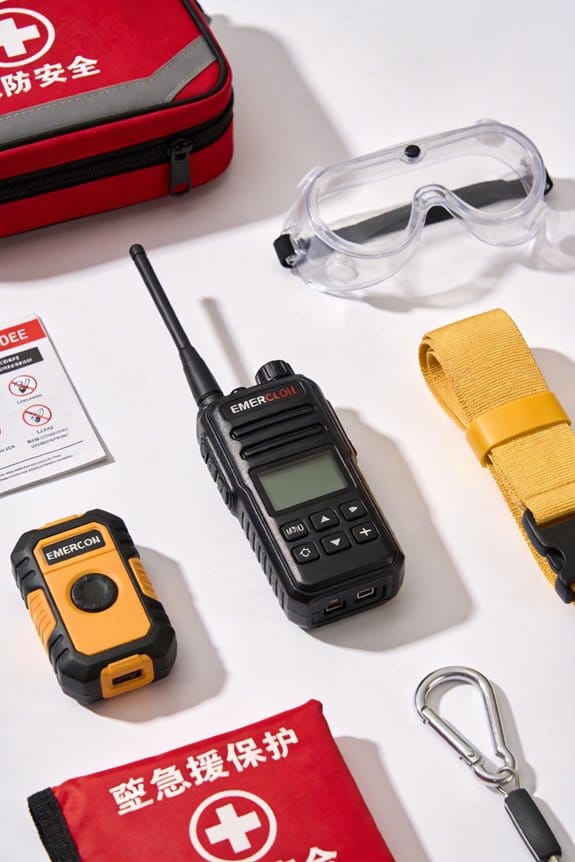
To wrap it up, preparing your elderly family members for emergencies takes teamwork, communication, and a little creativity. Remember to choose an OSHA-compliant emergency kit to ensure essential supplies are readily available during a crisis. What’s one change you can make today to help them feel more secure?
Resources and Support Networks for Ongoing Preparedness
Have you ever thought about how prepared your elderly loved ones are for emergencies? It can be a bit overwhelming, but building a solid support network is a crucial step in keeping them safe. Engaging family, friends, and even local organizations like the Red Cross can really strengthen that network. Plus, local Area Agencies on Aging often have key info about specific services for seniors during disasters.
To help improve preparedness, consider tapping into community programs and FEMA resources. Here’s what you can do:
- Emergency Supplies: Make sure they have all the essential items they need.
- Tech Alerts: Help them get connected to apps that provide timely updates about hazards.
- Regular Plans: Don’t forget to regularly review their emergency plan with input from your support network.
Truth is, it’s not just about having a plan; it’s about making sure they feel comfortable and supported. Including a Deluxe Personal Safety Emergency Pack can provide lifesaving supplies tailored for individual needs. So, what steps are you taking to help your elderly family members be ready for emergencies? It can feel daunting, but you’ve got this!
Frequently Asked Questions
How Often Should We Update the Emergency Preparedness Plan?
We should update our emergency preparedness plan at least twice a year, like the changing seasons. Regular reviews keep our family communication strong, ensuring we’re aware of local resources and emergency contacts when needed.
What Should Be Included for Seniors With Mobility Issues?
We should include mobility aids, clear communication strategies, accessible evacuation routes, reliable transportation options, and essential home modifications in our plans. These elements guarantee our seniors with mobility issues can stay safe and comfortable during emergencies.
How Can We Make Emergency Supplies Accessible for Elderly Family Members?
We should place emergency supplies in an accessible location with easy access. Regular supply rotation and visible reminders can help, while coordinating with support networks guarantees our elderly family members are always prepared and informed.
Are There Specific Considerations for Seniors With Medical Conditions?
Yes, we need to evaluate medical needs, guarantee proper medication management, establish effective communication strategies, provide caregiver support, and keep updated emergency contacts readily accessible for seniors with medical conditions in our preparedness planning.
How Can Technology Assist in Emergency Preparedness for Seniors?
Technology can greatly assist in emergency preparedness for seniors. Smart devices enable health monitoring, emergency alerts, and communication tools, while remote assistance guarantees timely responses, making us more confident in managing unexpected situations together.