


In modern security systems, data encryption serves as our frontline defense against unauthorized access and cyber threats. It converts readable data into unreadable ciphertext, protecting sensitive information both at rest and in transit. We use two main types: symmetric and asymmetric encryption, each with its advantages. Best practices include employing strong standards like AES-256, regular key updates, and end-to-end encryption. Join us as we explore the various algorithms, compliance standards, and emerging trends that enhance our encryption strategies.
Key Takeaways
- Data encryption acts as a digital fortress, protecting sensitive information against unauthorized access and cyberattacks.
- Symmetric and asymmetric encryption are two primary methods used, each with unique operational mechanisms.
- Strong encryption standards, like AES-256 and TLS 1.3, are essential to ensure data security and compliance with regulations.
- Effective key management and regular audits help mitigate risks associated with human errors and evolving security threats.
- Emerging trends like BYOE and EaaS leverage user control and scalable security measures to enhance data protection strategies.
What Is Data Encryption and Why Is It Essential?
Ever wondered how safe your personal information really is online? Data encryption acts like a digital fortress, keeping your sensitive data under wraps. With the increase in cyberattacks, it’s more important than ever to protect yourself from prying eyes.
Encryption helps to secure data whether it’s being sent over the internet or simply stored on your devices. It’s not just about peace of mind; it’s often required by law to comply with regulations like HIPAA and PCI DSS. The reality is, when data is compromised, it can lead to serious privacy issues and financial losses.
So, what does it take to encrypt your data? You’ll want to look into strong encryption standards, like AES-256 for symmetric encryption and RSA for asymmetric encryption. These help ensure your information stays safe, allowing only the right people access. You really can’t go wrong with implementing these methods if you’re serious about keeping your data secure.
Frankly, adopting encryption is an essential move for any organization that wants to build trust and safeguard sensitive information. The best part is, it’s a straightforward step you can take to boost your security measures. Don’t wait until it’s too late to think about how you’re protecting your data. Modern home automation alarm systems often utilize secure communication protocols to protect user data from unauthorized access.
How Does Data Encryption Work in Modern Security Systems?
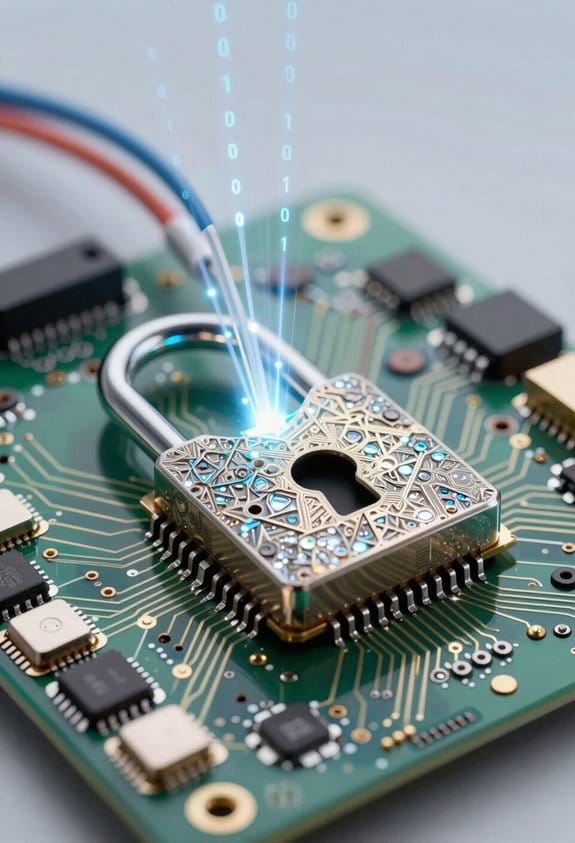
Ever wonder how your sensitive info stays safe when you’re online? If you’ve got questions about data encryption, you’re in good company. Encryption is like a secret code that keeps your personal information secure by turning what we call plaintext into unreadable ciphertext. This isn’t just tech jargon; it’s the kind of stuff that keeps your online banking details and personal conversations safe from prying eyes.
There are two main types of encryption you should know about: symmetric and asymmetric. Symmetric encryption uses a single key for both locking and unlocking your data, while asymmetric encryption uses a pair of keys—one public and one private—to make things even more secure. It’s like having a regular key for your front door and a special one that only your trusted family has.
When data is on the move—like when you’re shopping online or sending emails—protocols like TLS (Transport Layer Security) come into play. They encrypt the data during transmission, so no one can intercept and read it. That means that even if a hacker tries to steal your information while it’s traveling somewhere, they’d be out of luck.
Now, let’s talk about encryption standards. AES-256 is a big deal in this space. It’s considered one of the best because it offers strong protection against brute-force attacks. And speaking of protection, managing your encryption keys is just as important as the encryption itself. Regular key rotations and using hardware security modules (HSMs) can seriously boost your security.
Many modern security systems also incorporate professional monitoring services to ensure continuous vigilance beyond just encryption.
So, the next time you think about online security, remember these tips:
- Go with AES for solid protection.
- Make sure to regularly update and rotate your keys.
Keeping your data safe doesn’t have to be overwhelming. Just stay informed and proactive. Are you doing enough to protect your personal information?
Key Differences Between Symmetric and Asymmetric Data Encryption
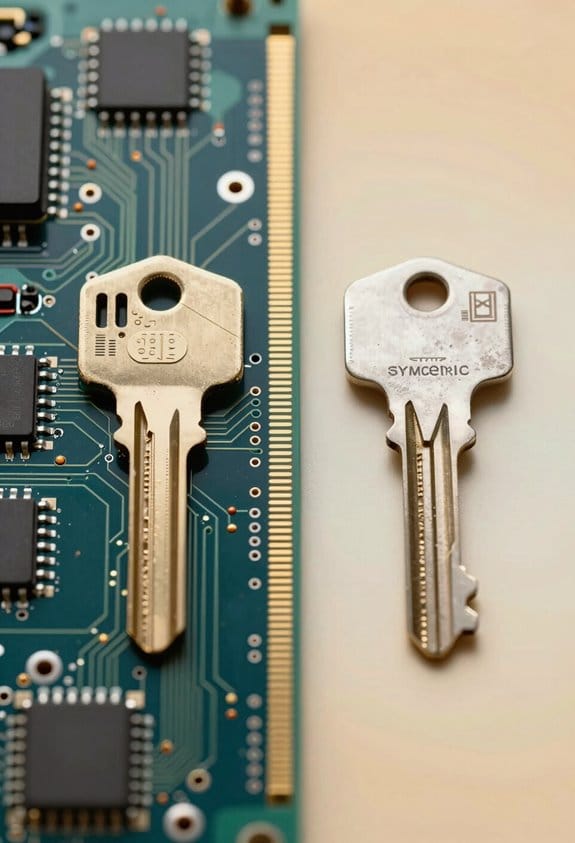
Understanding the difference between symmetric and asymmetric encryption can really change how you think about data security. Have you ever worried about your personal information getting stolen? You’re not alone. Let’s break it down so you can protect your data more effectively.
So, symmetric encryption is like having one key for a lock. You use the same key to lock (encrypt) and unlock (decrypt) your information. It’s fast and efficient, which is great, but here’s the catch: if someone gets hold of that key, they can access everything. Common algorithms like AES and 3DES are popular examples of symmetric encryption. So, if you opt for this method, make sure you’re using a solid key, preferably a longer one, to keep things safe.
Now, let’s talk about asymmetric encryption. This one’s a bit different because it’s like having two keys: a public key to lock your data and a private key to unlock it. This allows for secure sharing of information and also helps verify identities. You’ve probably heard of algorithms like RSA and ECC, which are staples in this method. The big advantage? Even if someone knows your public key, they still can’t decrypt your data without your private key. Isn’t that reassuring?
You might wonder, what’s the real difference in strength? For symmetric encryption, the security depends on how long the key is—longer typically means safer. For asymmetric encryption, it’s all about the math; breaking it requires a lot of computing power, especially when it comes to factoring large prime numbers. Honestly, both methods have their merits and knowing when to use each can make a big difference in safeguarding your data.
To sum it up, symmetric encryption is quick and efficient, while asymmetric encryption offers enhanced security for sharing sensitive information. The best part is that both play crucial roles in our digital lives. For example, many modern security cameras like the D1 4P 2K WiFi Camera utilize encrypted cloud backup to ensure the safety of stored footage. So, are you ready to dive deeper into how you can better protect your information?
What Types of Data Encryption Algorithms Exist?
Ever wonder how to keep your data safe? With so many encryption algorithms out there, it can be a bit overwhelming to figure out which one fits your needs. Let’s break it down so you can make an informed choice.
First off, we have symmetric encryption algorithms like the Advanced Encryption Standard (AES). These guys use a single key for both encrypting and decrypting your data. This method is fast and secure, and you can choose from key sizes of 128, 192, or 256 bits. If you’re looking for something quick, this might be the way to go.
On the other hand, asymmetric encryption algorithms operate a bit differently. They use a pair of keys—one public for encryption and one private for decryption. A well-known example is RSA, which typically starts at 2048 bits to keep your information safe. So, why does this matter? Well, if you’re sharing data over the internet, using asymmetric encryption helps ensure that it’s protected even if the public key gets out there.
It’s also good to know that some older methods, like Triple DES, have seen better days. They can struggle with performance issues and might not give you the security you want.
Now, let’s talk about Elliptic Curve Cryptography (ECC). This method is pretty nifty because it provides strong encryption while using smaller key sizes. That makes it a perfect fit for resource-constrained environments, such as mobile devices. The best part? You get effective security without draining your device’s battery!
To wrap it up, understanding these different encryption methods can really help you decide what’s best for your data protection needs. Many modern systems also rely on communication devices with secure encryption to maintain privacy in emergency scenarios.
What do you think would work best for you?
The Importance of Encryption for Data at Rest and in Transit
Have you ever thought about how secure your personal files really are? We often focus on choosing the right encryption algorithms, but it’s just as crucial to know how we protect sensitive information at rest and when it’s traveling over the internet. For instance, data at rest—like the files stashed away on your hard drive—can easily fall into the wrong hands if not properly secured. That’s where AES-256 encryption comes into play; it’s one of the best ways to shield your stored files from unwanted access.
Now, let’s talk about encryption in transit. This is all about data that’s moving across networks and could easily be intercepted. Using protocols like TLS helps keep that sensitive information safe while it’s zipping around the web. It might sound technical, but compliance with regulations like GDPR and HIPAA makes it clear: protecting data isn’t just a good idea, it’s necessary.
So why does this matter? Well, studies show that a staggering 70% of attacks happen within encrypted traffic. This fact highlights the need for strong strategies. You don’t just want to rely on encryption; you need a solid plan for it, whether your data’s sitting on a server or flying through cyberspace.
The best part is that by putting thorough encryption strategies in place for both of these scenarios, you’re significantly lowering your chances of a data breach. It’s all about ensuring that your data remains confidential and intact, no matter where it is or how it’s being used.
In the end, keep these points in mind: strong encryption can save you a lot of headaches down the line. Have you taken the right steps to protect your data? Remember, investing in a reliable home security system with real-time alerts can also enhance your digital security infrastructure.
Top Strategies for Effective Data Encryption Implementation
When it comes to keeping your data safe, encryption is one of the smartest steps you can take. But how do you make sure you’re doing it right? Here are some tried-and-true strategies that can help you protect what matters.
Use Strong Standards**: It’s crucial to implement reliable encryption standards. Strong algorithms like AES-256 for data stored on your devices and TLS 1.3** for information sent over the internet can go a long way in preventing unauthorized access. Trust me, having solid standards makes all the difference.
Key Management: Another biggie is managing your encryption keys. Setting up a strong Key Management policy is key (pun intended!). Think about using Hardware Security Modules (HSMs) for secure storage, and definitely plan for regular key rotation. Keeping your keys fresh can really help minimize risk.
End-to-End Encryption: If you’re handling sensitive communications, take the extra step with end-to-end encryption. This ensures your data stays protected from the moment it leaves you to when it arrives at the intended recipient. So, why does this matter? Because keeping that line secure means fewer chances for hackers to mess with your information.
Regular Audits: Don’t just set it and forget it. Make it a habit to regularly audit your systems. This way, you can check that you’re following regulations and spot potential vulnerabilities before they become a problem. It’s all about being proactive in your approach to security.
Training: Last but not least, don’t overlook the human factor. Training your employees on encryption policies is essential. Getting everyone up to speed can help cut down on mistakes that could compromise your data safety. Honestly, the better educated your team is, the safer your data will be.
Additionally, just like in emergency preparedness where choosing the right storage conditions preserves critical supplies, maintaining optimal environmental controls ensures your encrypted data remains secure and accessible over time.
Decoding Data Encryption Standards and Compliance
Ever wonder how to keep your data truly safe in this digital age? Understanding encryption standards and compliance is crucial. Using the Advanced Encryption Standard (AES) gives you peace of mind because it’s known for its strong protection, offering key sizes of 128, 192, and 256 bits. Compliance with regulations like GDPR and HIPAA is also key; it can shield you from legal trouble and make sure your encryption methods are up to par.
Here’s the trick: asymmetric encryption, like RSA, is great for secure key exchanges. This promotes private conversations, which we can all agree is essential.
It’s also smart to pay attention to guidelines from the National Institute of Standards and Technology (NIST). For example, FIPS 140-2 focuses on cryptographic modules that must meet federal standards. It might seem like a lot to digest, but following these guidelines can really bolster your data protection practices.
Regular audits and updates are a must to keep pace with changing regulations. This way, you not only align your practices with current laws but strengthen your overall data security strategy.
For physical security, integrating night vision capabilities in surveillance systems ensures comprehensive monitoring even in low-light conditions.
Common Challenges and Solutions in Data Encryption
Common challenges in data encryption can spring up from human mistakes, tech issues, and the constant evolution of online threats. Ever accidentally exposed a decryption key? It’s a big deal that can lead to serious data breaches. So, what can you do about it? Start by putting some solid key management policies in place. And don’t forget about those pesky malware threats that hang around on your devices—make sure you have strong endpoint security to keep unauthorized access at bay.
Brute force attacks are another real concern. If your encryption keys aren’t strong enough, forget about security! It’s smart to stick with at least 256-bit keys for AES encryption to give your data the protection it deserves. Insider threats can also wreak havoc, so don’t shy away from keeping a close eye on activity and performing regular audits.
Then there are vulnerabilities in encryption algorithms. Staying updated on the latest in cryptography isn’t just a good idea; it’s essential for keeping your sensitive data safe.
Truth is, regularly updating your encryption methods isn’t just a smart thing to do—it’s a must. Are you taking the necessary steps to secure your data? For the highest level of reliability, consider employing dual connectivity to ensure continuous protection even during network outages.
Emerging Trends in Data Encryption
As data breaches become more common, you’re probably worried about how to keep your sensitive information safe. It’s important to stay updated about the latest trends in data encryption so you can better protect yourself and your business.
Let’s dive into some of these trends:
- Bring Your Own Encryption (BYOE): This approach lets you take charge of your own encryption keys. By doing this, you gain better control over your personal data and who can access it.
- Encryption as a Service (EaaS): With subscription-based encryption options, businesses can easily scale their security measures as threats evolve. It’s a smart way to ensure you’re always prepared without breaking the bank.
- End-to-End Encryption (E2EE): Ever wonder who can see your messages while they’re in transit? E2EE makes sure that only the people you intend to communicate with can access your data, keeping prying eyes away.
- Field-Level Encryption: Picture this: you’re collecting sensitive information, like credit card numbers. Field-level encryption helps by securing specific parts of that data, ensuring you’re compliant with regulations.
- Machine Learning and AI: Technology isn’t just for the tech-savvy. Using AI can actually help spot vulnerabilities in encryption, which means better security for everyone.
In addition, just like a well-organized storage layout design enhances backpack functionality and access, structuring encryption protocols carefully improves security efficiency.
So, why does this matter to you? Keeping up with these trends isn’t just about being trendy; it’s about safeguarding what you value. Honestly, as threats evolve, so should our defenses.
In short, understanding the latest encryption trends can make a real difference in your data security strategy. Have you thought about which of these solutions might be right for you?
Frequently Asked Questions
What Are the Common Misconceptions About Data Encryption?
We often encounter encryption myths regarding security efficacy and complexity. Public perception often downplays the importance of key types, regulatory compliance, and user awareness, leading to implementation challenges despite clear encryption standards enhancing data privacy.
How Can Encryption Impact System Performance?
Encryption’s like a balancing act; we measure performance metrics against overhead considerations. While encryption algorithms enhance security, they can introduce latency issues and higher resource requirements, potentially impacting our user experience and processing speed in real-time scenarios.
What Are the Costs Associated With Implementing Encryption?
When we implement encryption, we face costs like licensing fees, hardware upgrades, software integration, training personnel, ongoing maintenance, compliance analysis, scalability, risk management investments, third-party vendor fees, and necessary audit and monitoring resources.
How Do Encryption Keys Get Managed and Protected?
We manage and protect encryption keys through secure key storage, implementing key rotation practices, using hardware security modules, and cloud key management—all while adhering to compliance requirements, enforcing access control measures, and emphasizing user training importance.
Can Encrypted Data Be Recovered if Keys Are Lost?
In the labyrinth of encryption, if keys are lost, accessing encrypted data becomes nearly impossible. However, key recovery options like encryption backup strategies can mitigate risks of data loss scenarios and guarantee data integrity through reliable storage solutions.