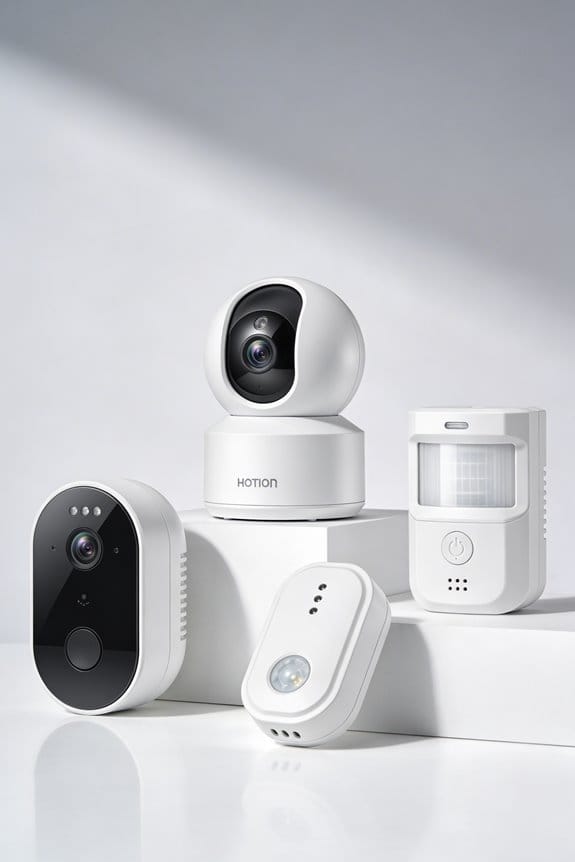

When we explore the types of motion sensors for home protection, we find several effective options, each with distinct features. Passive Infrared (PIR) sensors detect body heat within 20-30 feet. Microwave sensors cover 30-80 feet but can trigger false alarms. Dual-Technology sensors combine both for better accuracy. Specialized sensors, like pet-immune ones, reduce unwarranted alerts. It’s crucial to understand these differences to enhance our home security effectively. Let’s uncover more about each type in detail.
Key Takeaways
- Passive Infrared (PIR) Sensors detect body heat and are ideal for indoor use, effective within 30 feet range.
- Microwave Sensors use microwave pulses for detection, offering coverage up to 80 feet but may trigger false alarms from electronic interference.
- Dual-Technology Sensors combine PIR and microwave technology to enhance detection accuracy, minimizing false alarms by requiring both technologies to activate.
- Ultrasonic Sensors employ high-frequency sound waves, effective in cluttered areas but may be limited by environmental factors.
- Pet-Immune Sensors are designed to ignore small pets under 25 inches, reducing unnecessary alerts while maintaining security around homes.
How Motion Sensors Enhance Home Security and Monitoring
When it comes to beefing up your home security, motion sensors are right up there as one of the best tools you can have. Think about it—these little devices are great at picking up movement, and they send alerts when someone or something unexpected is detected. By integrating motion sensors into your home setup, you’ll boost your ability to monitor everything that happens in and around your space.
For instance, Passive Infrared sensors do a fantastic job of covering large areas without sending out false alarms all the time. And if you tie them in with security cameras? That’s a smart move. They’ll kick on the visual surveillance when needed, so you can see what’s going on if there’s a suspicion of trouble. Plus, when you use smart home systems, you’ll get real-time notifications. How cool is it to have lights automatically turn on when movement is detected?
If you want to ensure your home is as secure as possible, don’t forget about proper maintenance and placement of those sensors. Regular maintenance is key, and the right angle can make all the difference. What good is your security system if it’s not set up correctly?
Here are a couple of pro tips to keep in mind:
- Test your motion sensors consistently to make sure they’re still working accurately.
- Adjust the angles so you can catch all the potential blind spots.
Regular inspections and maintenance routines similar to those used in survival kits can greatly improve sensor reliability and longevity.
Exploring the Different Types of Motion Sensors
Looking to beef up your home security? Understanding the different types of motion sensors can really help you make the right choice.
- Passive Infrared (PIR) Sensors: These are the go-to for many homeowners. They work by detecting body heat and can pick up motion within about 20 to 30 feet. If you’re in a smaller space, these are often just what you need.
- Microwave Sensors: Here’s something to consider: these sensors send out microwave pulses to detect movement. They can cover larger areas, up to 70 or 80 feet, but be aware—they can be affected by environmental factors like rain or wind. So, if you live in an area with a lot of weather changes, think twice about these.
- Dual-Technology Sensors: Ever worry about false alarms? Dual-tech sensors combine PIR and microwave technologies to enhance accuracy. They can help you feel more secure knowing your system won’t trip over a swaying tree branch. Great option for home security systems!
- Ultrasonic Sensors: These sensors emit high-frequency sound waves and are especially effective in bustling environments. If your home is filled with furniture and decor, these might be the right pick for keeping tabs on who’s in your space.
For broader home security coverage, consider systems that support extensive sensor expansion to ensure all vulnerable points are monitored effectively.
Passive Infrared Sensors: Features and Benefits
Ever thought about how to keep your home safe without breaking the bank? Passive Infrared (PIR) sensors might just be your best bet. These devices work by sensing the infrared radiation emitted from warm bodies, making them an efficient way to monitor movement around your home, especially when it comes to securing your space.
Let’s dive into some key features that make these sensors stand out:
- Energy-efficient: They don’t hog power, which is perfect for long-term use even in a residential setting.
- Field of view: Installing them at a height of about 6 to 8 feet allows for great coverage while reducing those pesky blind spots.
- Range: Many can spot movement up to 30 feet away, and some models can reach as far as 70 feet.
- Integration: These sensors can be linked to your alarms and lights, adding an extra layer of security.
So, why does this matter? Imagine coming home from a long day and feeling confident that your property is closely monitored. The best part is that these sensors can catch the slightest hint of movement, which can significantly deter unwanted visitors.
When considering a home security option, keep in mind the practicality and efficiency of PIR sensors. They not only help you save on electricity but also ensure you’re alerted to any unusual activity. Honestly, having peace of mind knowing your home is secure makes all the difference.
To sum it up, PIR sensors bring together convenience and safety in a way that benefits your home life. Have you thought about where you might place one in your house? Many modern systems incorporate AI detection technology to further reduce false alarms and enhance security monitoring.
Microwave Sensors: Advantages and Limitations
When it comes to home security, motion sensors are often a hot topic. Have you ever wondered how to catch intruders in the act? Microwave sensors might just be what you need. These sensors can detect movement from a distance—usually between 30 to 50 feet—and under the right conditions, they can go up to 80 feet! Because they can penetrate walls and furniture, you can set them up in various spaces without worrying too much about obstructions.
But there are a few things to consider before jumping on board with microwave sensors. For starters, they can hit your wallet harder than other options. Plus, they might get confused by signals from other electronic devices, which can lead to those annoying false alarms. It’s also worth noting that overlapping signals could cause these sensors to trigger unnecessarily, making your home security a bit less reliable.
So, how can you make the most of these sensors if you decide to go for them? Here are a couple of tips:
- Keep an eye on installation guidelines to reduce the chances of interference.
- Test out the coverage area and adjust where you place your sensors to avoid any obstacles.
In short, while microwave sensors bring some great benefits to the table, being aware of their drawbacks will help you make an informed choice. Are you considering adding these to your home security system? Modern home systems often use motion sensors in combination with other sensor types to minimize false alarms and enhance reliability.
Dual Technology Sensors: Combining Strengths for Security
Are you tired of your home security system going off at the slightest movement? You’re not alone. False alarms can be really frustrating, especially when they interrupt your day or night. That’s where Dual Technology sensors come into play. By merging Passive Infrared (PIR) and microwave technology, these sensors help cut down on those pesky false alarms, while also boosting your home’s security.
Here are some reasons to consider this tech:
- Comprehensive Coverage: By blending these two detection methods, you get a wider range for spotting motion.
- Improved Sensitivity: These sensors are better at distinguishing between real threats and harmless movements.
- Customizable Security Setups: You can configure them to focus on the areas that matter most, like doors and windows.
Now, I have to admit, they do come with a higher price tag. But honestly, the benefit of having a system that accurately detects movement while reducing false alarms makes the investment worthwhile. You want to keep your home safe, right? Many monitored home security systems incorporate dual technology sensors to provide professional monitoring services that deliver quick police response and peace of mind.
Specialized Motion Sensors: Contact, Vacancy, and Pet-Immune
When it comes to keeping your home secure, specialized motion sensors like contact, vacancy, and pet-immune models can really make a difference. Ever worry about whether you left a door or window unlocked? Contact sensors can help ease that fear. They monitor your doors and windows, alerting you if someone tries to breach your perimeter.
Now, let’s talk about vacancy sensors. You might be wondering how to save on your energy bills while still keeping your home cozy. These sensors automatically turn lights on or off based on detected motion, using infrared technology to avoid unnecessary activations when there are just furniture or other household items in the way. It’s a simple way to keep the lights on when you’re walking around, but save electricity when you’re not.
Then there are pet-immune sensors. Truth is, if you’ve got furry family members scurrying around the house, false alarms can drive you nuts. These sensors are designed to ignore movement from pets typically under 25 inches tall. So, you can rest assured that your little buddy won’t trigger your security system every time they decide to chase after a toy.
The best part is that these sensors can work together to give you a comprehensive solution for home security and efficiency. Having the right devices in place can provide peace of mind and help you manage your home’s energy use. For optimal effectiveness, choosing sensors compatible with multiple connectivity options ensures seamless integration within your smart home ecosystem.
Best Practices for Motion Sensor Placement
Ever wondered how to make your home a little safer? Let’s talk about motion sensors. Properly placing them can really help you keep an eye on your property, making it easier to catch anything unusual before it becomes a problem.
To get started, consider mounting those sensors about 6 to 8 feet high. This height’s a sweet spot. You’ll want to put them at your main entry points, like doors and windows, as well as those high-traffic spots, like your hallways. You’ll be surprised at how much more secure your space feels once you’ve got this coverage.
Here’s the trick: steer clear of putting sensors near heat sources, like radiators, or in areas where they’ll get a lot of direct sunlight. Those hot spots can trigger false alarms, which can be pretty annoying. Instead, aim the sensors to catch motion moving parallel to their view—this will boost their ability to detect any movement that’s actually worth checking out.
And don’t forget to keep an eye on your settings! Every home’s different, so spend some time adjusting them based on the layout and what’s typical for your daily activities. Trust me; it’ll be worth it when you have a system that works just right for you. Also, integrating your sensors with AI-powered detection systems can significantly reduce false alerts and improve threat identification.
How to Install and Optimize Motion Sensors for Home Security
Installing motion sensors for home security doesn’t have to be a hassle, but it’s super important to get it right. Have you ever thought about how easy it is for someone to sneak inside without you noticing? One of the best tips is to set your sensors between 6 to 8 feet high. This height helps them capture more movement in larger areas and covers those tricky spots, like entry doors and hallways, where intruders are likely to slip in.
A common mistake people make is not checking the sensor’s field of vision for obstructions. You don’t want furniture or plants getting in the way—that can lead to false alarms, and who needs that kind of stress? Regularly testing your sensors is key too. It’s a good idea to tweak the sensitivity based on the usual activity in your home, like pets or the kids running around, so they won’t be triggered unnecessarily.
If you’re really into making life easier, consider pairing your motion sensors with your smart home system. The best part is this not only boosts your security but also adds a level of convenience you didn’t know you needed. So, when someone walks by your sensor, you could get an instant alert on your phone or have your lights turn on automatically.
In short, with a bit of thought and effort, motion sensors can provide an extra layer of security for your home. To further enhance protection, integrating sensors with AI detection technology can reduce false alarms and improve accuracy. Have you thought about how these little changes could impact your peace of mind?
Choosing the Right Motion Sensor for Your Home?
Choosing the right motion sensor for your home can feel overwhelming, especially with all the options out there. But let’s be honest—having reliable sensors can make a big difference in keeping your place secure.
First up, you’ve got Passive Infrared (PIR) sensors. These are pretty energy-efficient and excel at detecting body heat, making them perfect for indoor use. Think of them as your eyes when an intruder walks by—they pick up on movement without being intrusive.
Then there are microwave sensors. They offer wider coverage and can even penetrate obstacles like walls. Sounds great, right? But just a heads up—these can be a bit sensitive to interference, so keep that in mind if you’re considering this type.
If you really want the best of both worlds, check out Dual-Technology sensors. They combine the strengths of both PIR and microwave technologies. This means you get better detection with fewer false alarms, which is definitely a win for your peace of mind.
When you’re choosing a sensor, pay attention to the coverage range. Most PIR sensors can detect motion up to about 30 feet. To get the most out of them, think about where to place them. Mounting sensors around 6 to 8 feet high at key entry points will boost their effectiveness—this is especially true if you’re integrating them into a home security system or pairing them with motion sensor lights. For optimal security, consider combining motion sensors with outdoor cameras that feature AI motion detection to reduce false alerts and enhance monitoring accuracy.
Frequently Asked Questions
How Do Motion Sensors Affect Privacy at Home?
Motion sensors can raise privacy concerns due to data collection and surveillance impact. We must discuss sensor placement, notification settings, and ethical considerations, ensuring family discussions and legal regulations foster neighborhood trust and user awareness.
Can Motion Sensors Work With Existing Security Systems?
Yes, motion sensors can work with existing security systems! With various integration options, most of us can easily upgrade our security, avoiding compatibility issues through wireless technologies and user settings—enhancing our monitoring capabilities and performance metrics.
What Maintenance Do Motion Sensors Require?
We need to regularly clean sensors, follow a battery replacement schedule, adjust sensitivity, check installation locations, inspect wiring, troubleshoot issues, update software, assess environmental impacts, identify interference sources, and monitor device lifespan expectations.
How Can Weather Impact Motion Sensor Performance?
Weather can greatly impact motion sensor performance. Rain interference, snow accumulation, temperature extremes, and humidity effects can disrupt functionality. We should consider sunlight glare, fog influence, and seasonal variations during installation for ideal outdoor versus indoor use.
Are Motion Sensors Safe for Homes With Pets?
Absolutely, motion sensors can be safe for homes with pets! By utilizing pet-friendly settings, adjustable sensitivity levels, and proper sensor placement, we minimize false alarms while ensuring smart home integration and effective animal motion detection.