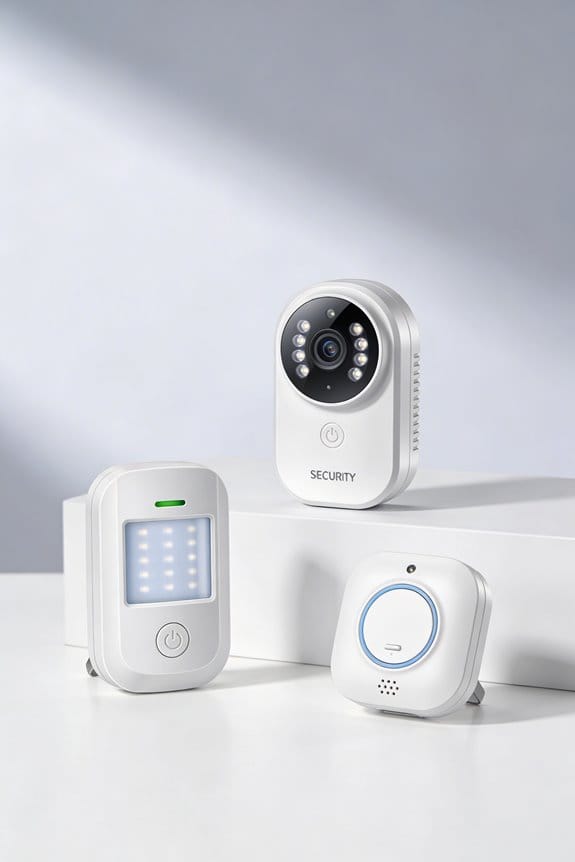
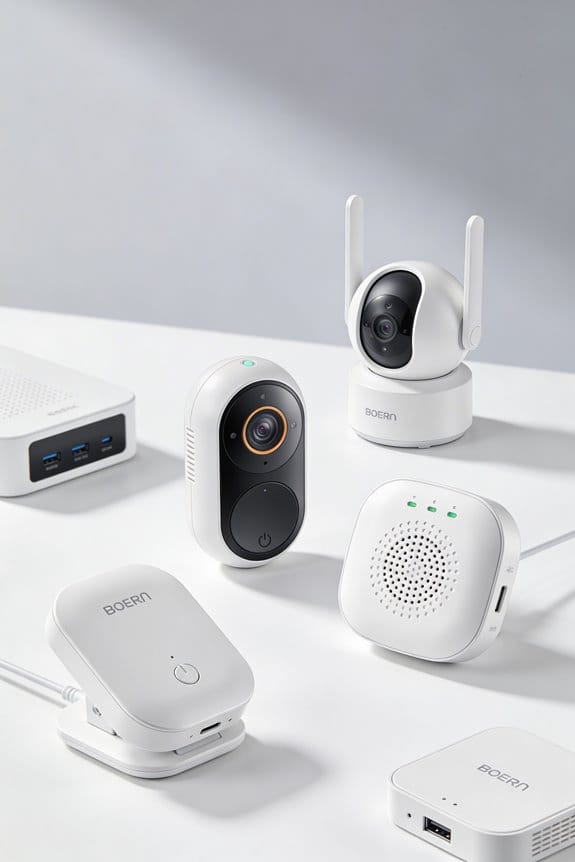

When understanding new wireless communication protocols for safety devices, we see how critical reliability and security are in emergencies. Protocols like Bluetooth Low Energy conserve battery life, while Zigbee and LoRa guarantee low power consumption without sacrificing performance. Latency matters; ideal response times are 5 to 20 milliseconds. We’ve tested various ranges, noting that lower frequencies offer better coverage. In our experience, strong encryption is essential to protect data. There’s much more to explore on this topic.
Key Takeaways
- New wireless protocols like Bluetooth Low Energy (BLE) and Z-Wave enhance safety device communication while conserving power and ensuring security.
- Mesh networking protocols, such as Zigbee and Thread, improve coverage and communication stability in safety-critical environments.
- Industry-specific protocols like WirelessHART and ISA100.11a are designed to meet stringent safety standards for industrial applications.
- Low latency and high reliability are essential for effective safety communication, with ideal response times between 5 to 20 milliseconds.
- Incorporating strong encryption and interoperability standards enhances data protection and compatibility among various safety devices.
The Importance of Wireless Communication Protocols for Safety
Have you ever thought about what happens when there’s an emergency? When every second counts, wireless communication protocols play a crucial role in keeping us safe. These protocols help get critical data to the right people instantly, reducing risks when things go wrong.
It’s pretty clear that sticking to safety standards like IEC 61508 for functional safety is key. This ensures our wireless safety systems are reliable and trustworthy. Plus, protocols with low latency, like EtherCAT, can meet tight safety response timelines, especially in places like industrial automation where every moment matters.
One of the best parts about wireless systems is their flexibility. They’re often cheaper to install than traditional wired solutions, which makes getting started a lot easier. But let’s not gloss over the downsides. We also need to be aware of security risks, like eavesdropping or denial of service attacks. These vulnerabilities can be disastrous in systems that are supposed to keep us safe. So, what can you do to protect your systems?
Here’s a tip: make sure you invest in strong security measures to safeguard your connections. Staying informed and proactive can really help reduce those risks.
Additionally, choosing systems with reliable professional monitoring services offers added peace of mind through trained agent response.
All in all, wireless communication is a vital part of safety tech. It helps ensure rapid responses in emergencies. So, it’s worth considering how well your systems are protected. Are you doing enough to secure your wireless safety systems?
Why Reliability and Security Are Critical in Safety Protocols
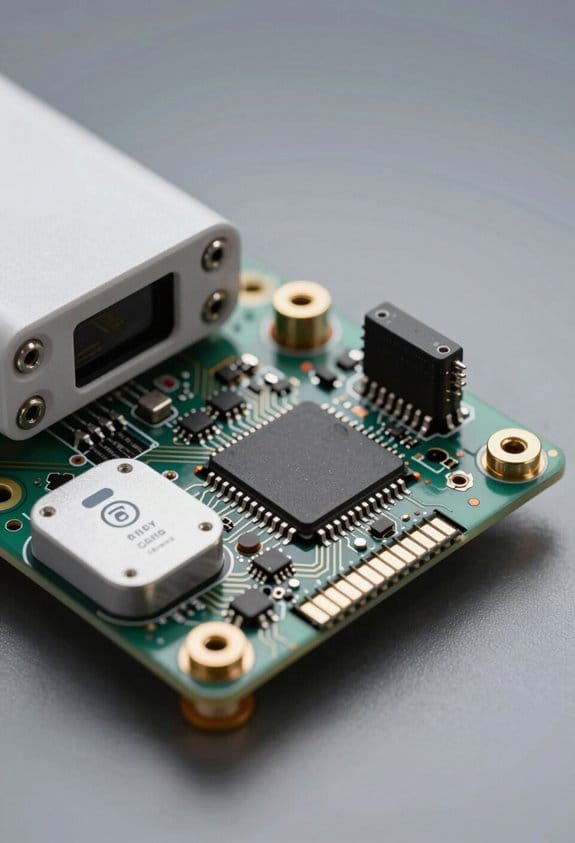
Have you ever paused to think about how crucial it is for safety protocols to be dependable and secure? With technology advancing at lightning speed, these factors aren’t just nice to have; they’re essential for preventing serious accidents. Let me break it down for you.
Reliability plays a huge role in ensuring that safety protocols work smoothly. When these systems have low latency and high uptime, they help keep everything running without a hitch. Imagine the consequences if they fail during a critical moment—catastrophic accidents are a real risk.
Then there’s security. You probably know that if a system has vulnerabilities—like someone snooping on communications—safety goes right out the window. It’s vital to have strong encryption methods in place, such as TLS or DTLS, to safeguard against these threats.
Regular risk assessments can be your best friend. They help you stay ahead of evolving risks and ensure your safety protocols meet the functional safety standards, like IEC 61508. This isn’t just paperwork; it’s about protecting lives.
When it comes to choosing a communication topology, think about something like a mesh network. It’s all about resilience which boosts both reliability and security.
Here’s the trick: Keep an eye on your system’s performance continuously. Be ready to adapt to new challenges as they arise.
In short, reliability and security are key to effective safety protocols. Emphasizing regular updates and replacements in your safety framework ensures continued effectiveness over time.
So, are you doing everything you can to ensure these elements are in place?
Key Wireless Protocols for Safety Systems
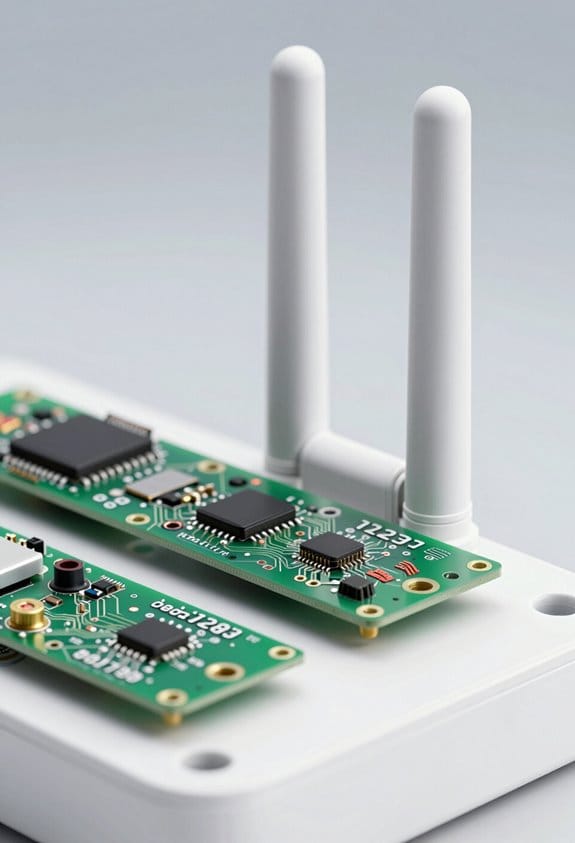
When it comes to safety systems, picking the right wireless protocol can feel like a daunting task. You might wonder, “What’s the best choice for my needs?” With a few standout options out there, let’s break them down together.
First up is Bluetooth Low Energy (BLE). If you’re looking for a protocol that won’t drain your device’s battery, this is the one to consider. It’s particularly useful for wearable safety gadgets, which means you can keep track of health metrics or emergency alerts without stressing over constant recharging.
Next, you’ve got Z-Wave. This one operates below 1 GHz and is a solid choice if you’re focused on security. Imagine having smart locks or home alarms that communicate securely—Z-Wave makes that a reality, which is great for peace of mind at home.
Then there’s the Thread Protocol. This one’s all about low-power mesh networking, which sounds complex but simply means that devices can talk to each other efficiently. It’s pretty handy if you want multiple devices to work together seamlessly while keeping your data safe.
Finally, for those in industrial settings, take a look at WirelessHART and ISA100.11a**. Designed specifically for heavy-duty use, these protocols provide reliable communication that meets strict safety standards**. So if you’re in an industry where safety is critical, you can trust these options.
Many modern alarm systems also integrate with existing devices using IFTTT functionality, enhancing automation and interoperability across your safety network.
Understanding Latency and Responsiveness in Safety Devices
When it comes to safety devices, latency is a big deal. Ever think about how quickly a system needs to react when there’s a potential threat? In industrial settings, for example, safety devices really need to respond in milliseconds—ideally between 5 to 20 milliseconds—to keep those accidents at bay. If there’s high latency, there’s a real risk of delayed safety shutdowns or alarms, and that can lead to some truly dangerous situations.
So, what can you do about it? Start by choosing the right wireless protocols. Some are built for low-latency communication, like EtherCAT, which helps ensure real-time performance. Understanding latency isn’t just a technical detail; it’s crucial for meeting safety standards like IEC 61508, which lays out the rules for functional safety in automation.
Here’s the trick: always test your system under load to confirm that latency meets those safety requirements! It’s one of those things that might sound tedious, but it really makes a difference.
At the end of the day, keeping track of latency is about more than compliance; it’s about protecting lives. Have you considered how your safety systems stack up? Selecting systems with features such as AI detection capabilities can also enhance responsiveness and reduce false alarms in safety-critical environments.
How Range Affects Safety Communication Reliability
Effective range makes a big difference in how reliable safety communication is for wireless devices. Ever tried using Wi-Fi in a larger house? You may have noticed that the further you are from the router, the slower it gets and the more unreliable your connections become. So, why does this matter?
Take higher frequency protocols like Wi-Fi at 5 GHz. They often struggle with longer distances and might not be the best choice for safety applications indoors. On the flip side, frequencies like 900 MHz can go further while better penetrating walls and obstacles. That’s key when you’re ensuring communication is dependable in critical situations.
If you’re looking to stretch your coverage further, consider using mesh networking protocols, such as Zigbee. These let devices talk to one another and effectively extend operational coverage. Even better are long-range protocols like LoRaWAN, which can connect devices over several kilometers. This makes them ideal for safety devices, especially in large areas where you need solid communication. Choosing the right network setup, like mesh over star topology, can really crank up your communication stability.
Additionally, portable safety devices often incorporate advanced sensor technology to ensure accurate and reliable monitoring even when communication ranges vary.
Balancing Power Consumption With Performance in Safety Devices
When you’re looking at safety devices, finding that sweet spot between power consumption and performance is crucial. Ever wonder why some devices seem to drain their batteries faster than others? During our tests, I’ve noticed that communication protocols like ZigBee and LoRa really shine in this area. They help keep power consumption low while still delivering the real-time performance you need. Seriously, these protocols let safety devices work on low-duty cycles, and that can stretch battery life by 10 to 20 times compared to some older methods.
So, what are some ways you can get the most out of your devices? Here are a couple of things to keep in mind:
- Advanced sleep modes: Making the most of these can really help your battery last longer.
- Power-efficient protocols: Consider using protocols like Thread. They can help you maintain peak performance without sucking the life out of your battery.
Additionally, choosing devices with two-year battery life can significantly reduce maintenance and improve reliability.
Now, you’re probably asking yourself, why does any of this really matter? Well, it’s all about making sure that your safety devices do their job without constantly needing a charge. So, the next time you’re setting up a safety device, think about these tips. You might just end up with a device that works longer and better.
In the end, it’s all about ensuring your safety devices are ready when you need them most. Are you ready to implement some of these strategies?
Why Data Rate Matters for Emergency Response Safety Devices
Imagine you’re in an emergency situation where every second counts. The value of fast and reliable communication becomes critical, especially when it comes to emergency response safety devices. Data rate is a big part of this—here’s how it really plays out in real life.
When devices can transmit information quickly, it makes a world of difference. Higher data rates mean you can get real-time updates, like video feeds or environmental alerts, without delay. This helps first responders make quick decisions that could save lives.
Now, let’s talk about latency. Did you know that even a small delay, over 100 milliseconds, can put safety interventions at risk? That’s why it’s crucial for systems to focus on low-latency communication. You don’t want to wait on critical information when every moment matters.
Another factor to consider is the frequency band your device operates on. Generally, devices using the 5 GHz band can hit higher data rates than those on the 2.4 GHz band. This makes them more dependable in emergency scenarios, where fast communication is essential.
Think about crowded environments, too. When multiple devices are in use, maintaining steady data transmission is key. Disruptions in wireless communication can complicate an already tense situation, so it’s important to ensure everything works seamlessly.
In addition, compatibility with multiple communication protocols such as Zigbee, Z-Wave, and Wi-Fi helps ensure interoperability and reliable connectivity in complex smart home security environments.
Essential Security Features for Wireless Safety Protocols
When you’re depending on wireless safety protocols, security has to be a top priority. After all, these systems play a key role in keeping you informed and protected during emergencies. So, what can you do to help guarantee strong security for your wireless networks?
First off, it’s all about solid encryption methods like TLS and DTLS. These tools help keep your data confidential and intact while it’s traveling. You’ll also want to focus on effective authentication mechanisms—things like unique device identifiers and secure key exchanges can really help protect you from unauthorized access. You want to make sure only legitimate devices are connecting to your network.
Another useful step is to conduct regular vulnerability assessments. This way, you can stay ahead of any new threats that pop up. Alongside that, error detection algorithms will boost your data accuracy. Honestly, these small steps can make a significant difference in your overall safety.
And let’s not forget about the importance of a defense-in-depth strategy. Adding multiple layers of security can really enhance your protection. It’s like building a fortress around your wireless safety protocols.
In addition, integrating intelligent detection technologies similar to those used in advanced surveillance cameras can improve the responsiveness and accuracy of your security system.
The Role of Interoperability in Safety Device Communications
Ever had a situation where you thought you were safe, but then something unexpected happened? That’s where interoperability in safety device communications comes into play. When different devices from various manufacturers can’t talk to each other effectively, it can lead to gaps in safety oversight. You don’t want to find out that your safety system isn’t as reliable as you thought.
One way to avoid this is through standardized communication protocols, like OPC UA and EtherNet/IP. These protocols help ensure smooth data exchange between safety systems in your workplace. Imagine your devices sharing critical updates without a hitch—suddenly, those blind spots disappear, making your operations much safer.
Here are a couple of tips to consider:
- Make sure all your devices meet industry standards, like IEC 61508. This helps ensure they’ll cooperate seamlessly with one another.
- Testing is key. Take the time to evaluate how well different devices work together during the testing phases. This can save you headaches down the road.
So, why does this matter? Well, if your devices aren’t compatible, even the best safety systems can become a liability. Think about it—how confident can you be in a system that just doesn’t communicate well?
In short, don’t underestimate the importance of interoperability in safety device communications. When everything works together, you’re not just enhancing operations; you’re genuinely improving safety. What steps are you taking to ensure your devices are in sync? Integrating with modern systems that support wireless communication protocols like Z-Wave or Wi-Fi can further enhance interoperability across devices.
Future Trends in Wireless Communication for Safety Systems
Have you ever wondered how your safety systems could work better in today’s fast-paced world? Wireless communication is evolving, bringing some fascinating changes that could really make a difference. We’re on the verge of welcoming technologies like 5G and LoRaWAN, which promise to enhance real-time data transfer in various settings, especially industrial ones.
There are several key trends to keep an eye on:
- Mesh Networking: This approach helps ensure that if one part fails, the others can still keep things running smoothly. It’s all about reliability when it comes to safety.
- IoT and AI: By analyzing data patterns, these tools can predict issues before they happen and automate responses, which can significantly boost safety measures.
- Security Protocols: With the rise in cyber threats, having strong encryption and secure authentication is more important than ever. Keeping your sensitive data safe should be a top priority.
Honestly, regulatory bodies are stepping up too, establishing new standards that might speed up the adoption of these innovative wireless technologies. How cool is it that these advancements could transform how we think about safety systems in our daily lives?
Additionally, integrating AI detection enhancements into wireless safety devices can significantly improve their responsiveness and reduce false alarms.
Frequently Asked Questions
What Are the Key Challenges in Implementing New Wireless Protocols?
We face key challenges like scalability issues, security vulnerabilities, and integration difficulties. The cost implications can be high, while interoperability challenges and user acceptance also complicate the implementation of new wireless protocols effectively.
How Do Environmental Factors Affect Wireless Signal Reliability?
Just like a song’s melody can be disrupted by a loud crowd, our wireless signals face challenges. Signal interference, weather conditions, physical barriers, and environmental noise all play significant roles in determining reliability and strength.
Are There Specific Industries That Require Specialized Protocols?
Yes, we find that industries like the automotive, healthcare, industrial automation, aerospace, telecommunications, and oil and gas require specialized protocols to guarantee safety, reliability, and efficient communication under their unique operational demands and environmental conditions.
What Is the Role of Regulatory Standards in Wireless Safety Communications?
Regulatory standards guarantee communication safety by enforcing regulatory compliance in wireless technology. They guide standard development and protocol implementation, making certain safety devices operate effectively and securely, ultimately protecting users and enhancing overall safety outcomes.
How Can Organizations Assess the Effectiveness of Their Current Protocols?
Did you know 70% of organizations struggle with protocol compliance? We can assess effectiveness through protocol evaluation criteria, using effectiveness measurement tools, stakeholder feedback mechanisms, and incident reporting analysis in robust compliance auditing strategies and protocol improvement cycles.