
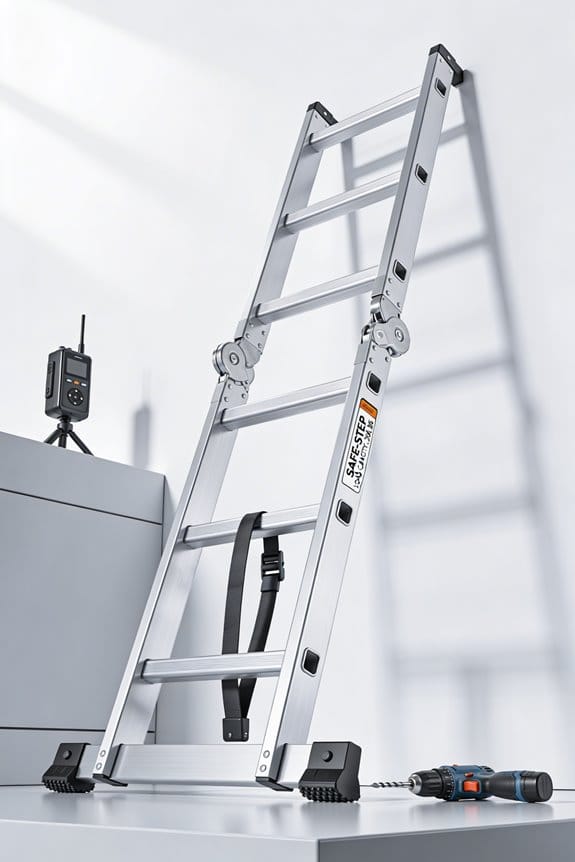

When we install high-mounted devices, proper ladder safety is essential. We need to select a suitable ladder, preferably a Type IA model, and make certain it extends at least 3 feet above the eave. Setting the ladder at a 75 ½ degree angle, we also maintain three points of contact while climbing. Regular ladder inspections help catch wear or damage. Following OSHA guidelines guarantees our safety at heights over 4 feet. There’s more to learn about effective practices and compliance to keep us safe.
Key Takeaways
- Select the appropriate ladder type and length, ensuring it extends at least 3 feet above the eave for safe access while installing.
- Position the ladder at a 75 ½ degree angle, maintaining a 4 to 1 ratio for base placement relative to height.
- Always inspect ladders beforehand for wear or damage, and ensure stable ground free of obstacles before climbing.
- Maintain three points of contact while climbing and working on the ladder to enhance stability and prevent falls.
- Implement fall protection measures, following OSHA guidelines, for any work performed at heights greater than 4 feet.
Understanding the Risks Associated With High-Mounted Installations
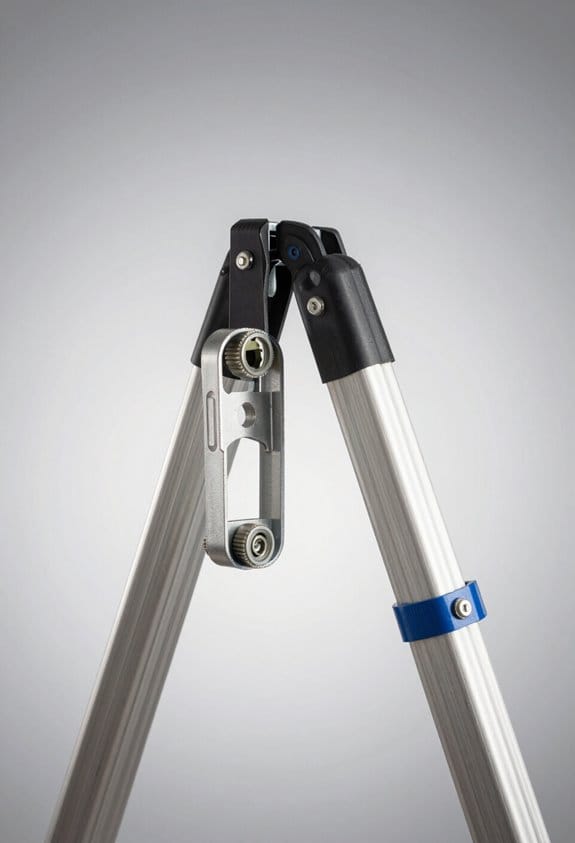
High-mounted installations can be a tricky business, can’t they? If you’ve ever worked at heights, you know that falls are a serious risk. In fact, falls from heights are one of the leading causes of fatalities in construction. A staggering 81% of fall injuries in the industry involve ladders. That’s why it’s crucial to prioritize safety measures.
Here’s the trick: always follow OSHA standards. If your work involves being over 6.5 feet off the ground, you need to have a personal fall arrest system or some kind of fall protection in place. Installing guardrails around edge hazards can also provide a nice layer of passive protection. It’s like having an extra line of defense to help minimize fall risks.
But let’s not stop there—ladder inspections are vital as well. It’s essential to check for any signs of wear or damage. You don’t want to be climbing a ladder that’s seen better days. So, don’t skip this step; it could make all the difference between a successful installation and a serious accident.
Truth is, by implementing these simple safety practices, you can significantly lower the chances of accidents during high-mounted installations. A little bit of precaution goes a long way in creating a safer work environment for everyone involved. Additionally, ensuring that contractors have comprehensive liability insurance offers extra protection in case of accidents during installations.
Recommended Products
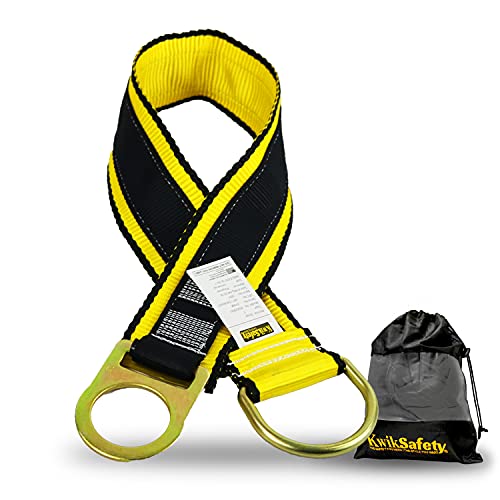
COMMERCIAL OR RESIDENTIAL – The KwikSafety GIBBON GRIP is a versatile tool that can be used for small or heavy duty jobs; This safety anchor is functional whether the job is residential, commercial, or even industrial markets such as construction, roofing, aerial lifts, scaffolding, fall protection kits, guardrails, lanyard extension or anchor to a beam, swing hanging, tree trimming, arborist, and many more! You can be sure the Gibbon Grip cross arm strap will help you get the job done, be safe!

![KwikSafety - Charlotte, NC - Tsunami [Premium Braided Rope] Vertical Lifeline ANSI OSHA Rope Grab Snap Hook Shock Absorber Fall Protection Line Kit Restraint System Roofing Safety Equipment / 50 FT.](https://m.media-amazon.com/images/I/51iQ5yYMTiL._SL500_.jpg)
PREMIUM BRAIDED ROPE (Better Than Twisted Rope!) - Durable vertical lifeline rope/lineas vida made of yellow & black quality interlaced 100% polyamide fall protection rope. The braided design makes it stronger & more resistant against abrasion & standard use, making this roof rope more flexible, sturdy & long-lasting. Features a hardened, plastic thimble for greater strength & includes a 100% polyester shock protection absorber enclosed in a PVC cover that will deploy in the event of a fall.
Selecting the Right Ladder: Type and Length Considerations
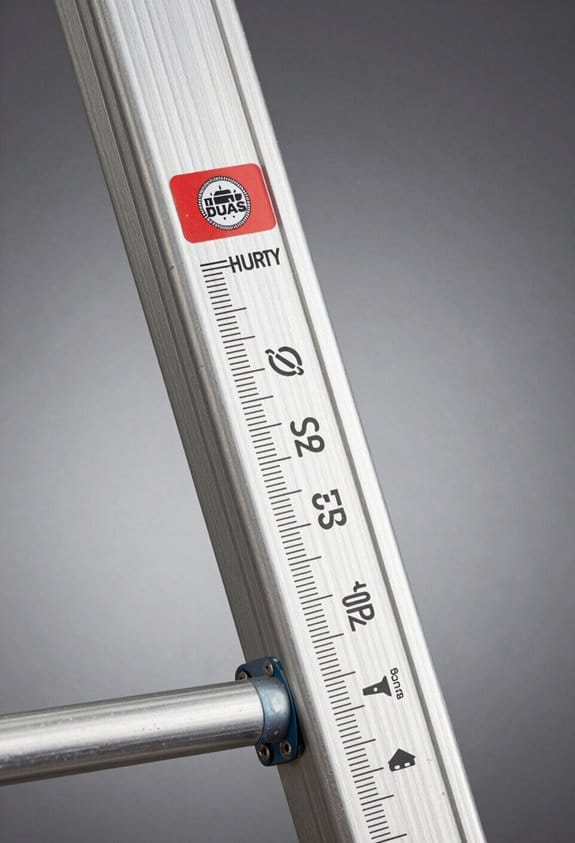
Choosing the right ladder can feel overwhelming, especially when you think about all the risks involved in high-mounted device installations. You want to ensure your safety while getting the job done right. So, how do you pick the perfect ladder for your project?
Let’s start with Type IA Ladders. These ladders can hold up to 300 pounds, which is great because that means you can use them safely along with your tools. Just make sure you check the weight limits before climbing up!
Length is another crucial factor. Your ladder should reach at least 3 feet above the eave for safe access. Imagine trying to balance if your ladder doesn’t reach high enough! Not a fun scenario.
If you’re dealing with heights greater than 24 feet, you definitely need a fall protection system. It’s not just a good idea; it’s required to stay compliant with OSHA standards. So, don’t skip this step; your safety is worth it.
Material matters, too. Aluminum ladders are lightweight and easy to carry, but if you’re around electrical work, steer clear of them. Instead, fiberglass ladders are your go-to choice here since they’re non-conductive, even though they might be a bit heavier.
And here’s something you might not have thought of: the 4 to 1 rule for stability. Position the base of your ladder 1 foot away from the wall for every 4 feet of height. It sounds simple, but this trick goes a long way in preventing accidents.
For added protection, ensure your equipment, such as smoke detectors, is UL certified for safety standards before installation.
Recommended Products
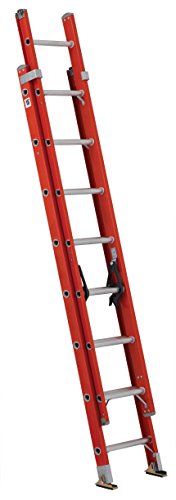
NON-CONDUCTIVE: Crafted with fiberglass for non-conductive safety assurance, this extension ladder combines strength and durability.

NON-CONDUCTIVE: Crafted with fiberglass for non-conductive safety assurance, this extension ladder combines strength and durability.
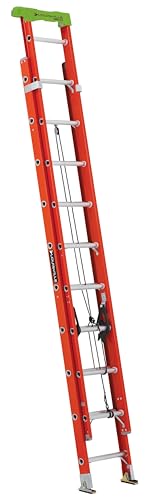
Heavy-duty capacity: The Louisville 20-Foot Fiberglass Extension Ladder supports up to 300 pounds, meeting ANSI Type IA standards for professional-grade use.
Correct Ladder Setup: Achieving the Right Angle for Stability
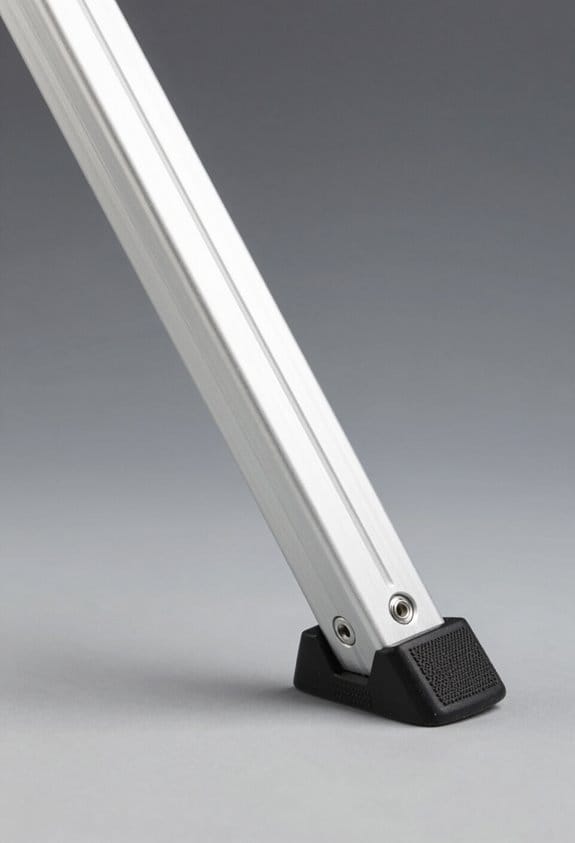
Have you ever tried to set up a ladder only to feel a bit wobbly or unsure if it’s safe? Getting the ladder positioned correctly is super important. Not only does it help prevent accidents, but it also makes your job a lot easier when working at heights.
Aim for about a 75 ½ degree angle. One rule of thumb is to follow a 4 to 1 ratio—so for every four feet of height, you want the base of the ladder to be one foot away from the wall. It’s crucial to place the ladder on level ground too. No one wants to be halfway up a ladder that’s teetering on an uneven surface.
Here’s a tip: Make sure the top of the ladder extends at least 3 feet above the point you’re working on. This gives you a solid hold as you climb up or down. And while you’re at it, take a moment to check your setup against OSHA standards. Regularly checking ensures you’re creating a safer work environment and helps reduce those pesky fall-related injuries.
- Always double-check for level ground.
- Secure the top against a stable surface.
When installing security devices, consider the ease of DIY installation to save time and reduce setup complications.
Recommended Products
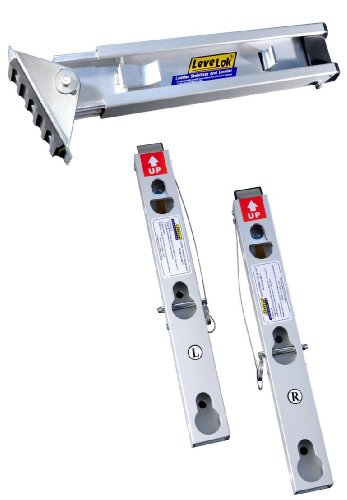
Quick Connect Ladder Leveler Kit, contains 1 leveler and 2 base units.

Main Parameters: The ladder stabilizer is designed to work with steps that have a rise between 10.2" and 16.5". It's also adjustable to 1/8" increments, providing precise control over the height of your ladder. The maximum platform size for this tool is 23.7'' x 7.5'', ensuring a stable and secure base for your ladder

【Security And Stability】:Our High-grade Ladder Leveler are constructed with strength and reliability. The non-slip gripping surfaces are automatically locked in place when you use the stair ladder. The back cross brace structure reinforces the basic support which is up to 500 lbs. (227 kilos) . Its ribbed rubber grips on all corners will provide great slip resistance. This Ladder Jacks will give you a comforting experience when you are that high on a ladder painting your stairwell.
Safety Practices for Climbing and Working on Ladders
Ever thought about how many accidents happen simply because someone misjudged a ladder setup? It’s a sobering statistic—falls are responsible for a lot of injuries both at home and on job sites. That’s why keeping safety in mind while using ladders is key. Here are some straightforward tips you can follow to stay safe:
- Keep three points of contact when you’re climbing or working on that ladder. It sounds simple, but this tip really can help you stay stable and make falling less likely.
- Try this: for every four feet of height you need to reach, position the base of the ladder one foot away from the wall. This little trick can make a world of difference in maintaining overall balance.
- Be sure you’re on stable ground. You don’t want to set your ladder up over obstacles or on uneven surfaces—this can lead to some dangerous slips.
- Before you even think about climbing, give your ladder a thorough once-over. Check for any signs of wear or damage, and don’t forget to know the ladder’s duty rating based on the manufacturer’s instructions to steer clear of unnecessary risks.
Additionally, for extended tasks, consider having access to a 72-hour emergency survival kit nearby to ensure preparedness in case of unexpected incidents.
So, why does this matter? Taking the time to set things up properly not only protects you but also gives you peace of mind. Safety is not just a checklist; it’s about looking out for yourself and preventing accidents before they happen.
Recommended Products

Heavy-Duty Support: With a 380-pound load capacity, this leveler offers stable, non-slip performance. Designed for precise angles of 26°±1° and 77°±1°, it handles slopes, indoor steps, wooden or grassy surfaces, and rooftops with ease.

TOUGHER ladder leveler is made of high-quality alloy steel, which is firm and durable. The ladder foot is removable and replaceable, made of natural rubber, which maximizes the friction between the ladder and the ground, anti-skid and wear-resistant.
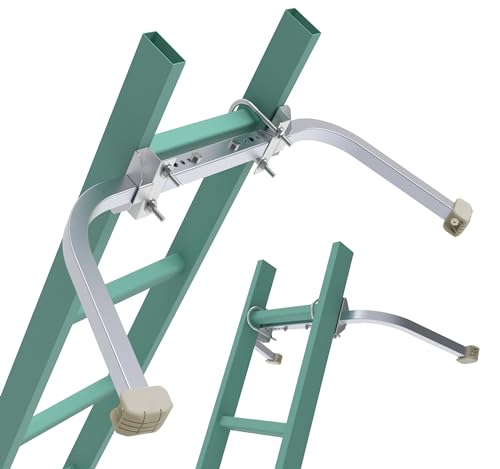
【UPGRADE 】Aluminum ladder stabilizer for roof gutter guard with creamy white rubber mat,non-slip and protect your beautiful wall surface from pollution,no scratch.Fits to most little giant ladder accessories and other,Please see the picture for the dimensions.(Patent No:222101952U)
What You Need to Know About OSHA Compliance for Ladder Safety
When working with ladders, safety should always be top of mind. Ever thought about how many accidents stem from simple slips or falls? That’s why getting a handle on OSHA compliance isn’t just for big companies; it’s essential for all of us. According to OSHA 1910.23, fixed ladders have to meet certain standards to keep folks safe.
If you’re climbing a ladder that reaches 24 feet or more, you’ll need a safety system or a personal fall arrest system. It’s important that you can climb without fussing with those safety measures. This just makes sense, right? You want to focus on your work, not on adjusting equipment while you’re several feet off the ground.
OSHA even says that if you’re working at a height of over 4 feet, you need to have some form of fall protection in place. This can be guardrails or safety nets. Here’s the kicker: these measures are critical for preventing accidents that can lead to serious injuries. There’s no denying ladder-related incidents have a big impact on our industry.
When installing devices such as high-mounted CCTV cameras, always consider the durability and weather resistance of the equipment to ensure long-term safety and reliability in outdoor conditions.
Recommended Products

Extends Ladder: Extends 3’ above the top of the ladder to provide a safe and easy transition to another surface


What to Do in an Emergency?
Have you ever found yourself in a situation where a ladder turns into an unexpected accident waiting to happen? It’s nerve-wracking, right? When that moment hits, your top priority is everyone’s safety. The first step? Don’t panic. Quickly call for help and take stock of what’s happening. If someone’s injured, assess the situation calmly.
To prepare for moments like these, always keep your mobile phone handy—make it easy to reach for during emergencies. Familiarizing yourself with workplace procedures can be a lifesaver, especially when it comes to knowing evacuation routes and handling first aid for ladder-related injuries.
It’s also a good idea to check that first aid kits are fully stocked and close enough to grab when needed.
Regular safety drills really do make a difference. They help you and your team respond swiftly and effectively when a ladder mishap occurs. So, why does this matter? Because understanding these procedures can empower you to promote safety and provide help in intense situations.
In the end, being prepared can make all the difference. Consider keeping an American Red Cross first aid kit nearby to ensure quick access to essential supplies in an emergency.
Have you practiced dealing with emergencies like this? What steps do you think you can take to enhance safety in your space?
Frequently Asked Questions
What Are the OSHA Guidelines for Ladder Safety?
We must follow OSHA guidelines by using a ladder inspection checklist, practicing safe ladder usage, employing fall prevention strategies, and attending ladder training programs. Let’s prioritize outdoor ladder safety and understand ladder types for effective maintenance.
What Are 5 Ladder Rules That Should Be Followed for Safety?
We should always guarantee ladder stability techniques are in place, choose proper ladders, consider weather conditions, perform ladder maintenance, secure ladders safely, and use appropriate safety gear during ladder training for ideal safety.
What Is the 1 in 4 Rule for Ladders?
The 1 in 4 rule states that for every four feet of ladder height, we should position the base one foot away from the wall. This guarantees stability, safety, and proper ladder angles during use.
What Is the Golden Rule of Ladder Safety?
When we’re climbing the ladder of safety, let’s guarantee we maintain three points of contact. This golden rule fosters stability, proper positioning, and fall protection—essential for using various ladder types and maximizing load capacity safely.