
Having a solid home evacuation plan is vital for our safety during emergencies. We need to map out at least two escape routes from each room and regularly practice these routes. It’s important to involve everyone in the planning and conduct fire drills at least twice a year. Additionally, installing smoke alarms in key areas provides life-saving alerts. Doing this not only boosts our preparedness but also guarantees quick organization during real emergencies. Let’s explore more on how to create an effective plan.
Key Takeaways
- Create a detailed floor plan indicating at least two escape routes from each room and the location of smoke alarms and extinguishers.
- Designate a safe meeting spot outside the home where all household members can gather after evacuation.
- Conduct regular fire drills, at least twice a year, to practice escape routes and familiarize everyone with the evacuation plan.
- Keep all escape routes clear of clutter to ensure fast and safe exits during emergencies.
- Educate all household members about evacuation procedures, ensuring everyone understands their roles and responsibilities in an emergency.
Why You Need a Home Evacuation Plan
When it comes to emergencies, do you ever think about how prepared you really are? Having a solid home evacuation plan can make a huge difference. A good fire escape plan means knowing at least two exits from every room. This gives everyone in the house options if disaster strikes—especially during a fire. And let’s face it, practicing those escape routes with regular drills can really cut down on panic when the moment comes.
Don’t forget about smoke alarms. These little devices are lifesavers, alerting you to danger before it gets out of hand. It’s also smart to pick a safe meeting spot outside your home. This way, you can quickly account for everyone and ensure nobody is missing. Frankly, a well-thought-out evacuation plan can help minimize risks for everyone, including those who might have trouble moving quickly.
So, why does this matter? Because in a crisis, you want to be able to respond efficiently. You never know when an emergency might happen, but taking these steps now means you won’t be caught off guard later. Including a Red Cross emergency kit in your plan ensures you have essential supplies ready for unexpected situations.
In short, prepare your family today to keep everyone safe tomorrow. What steps will you take to make sure everyone knows exactly what to do in an emergency?
Essential Components of Your Evacuation Strategy

What would you do if the smoke alarm went off in the middle of the night? It’s a scary thought, but having a solid home evacuation plan can really make a difference when it comes to keeping your family safe.
Start by mapping out at least two escape routes from each room in your home. This way, if one route is blocked, you’ll have another option available. Don’t forget to pick a safe meeting spot outside that everyone can remember—it could be a neighbor’s front yard or a tree a few houses down. Keeping this meeting place consistent helps everyone gather quickly after an evacuation.
Regular practice is key, so schedule fire drills at least twice a year. You’ll be surprised how much this reinforces the plan and helps everyone remember their roles if something goes wrong. It’s not just about memorizing the routes; it’s about feeling confident that you can act quickly.
Also, check those escape routes often. Keep them clear of clutter, and make sure windows and doors can be opened without a hitch. It only takes a few seconds for a dangerous situation to develop, so ensuring that you won’t be stymied by stuck windows or locked doors is crucial.
And here’s the kicker: get everyone involved. It’s not just about you leading the charge; letting all household members input on the plan makes it more likely they’ll remember what to do. When everyone shares the responsibility, there’s a better chance of a smooth exit.
In addition to having an effective evacuation plan, it’s wise to prepare an emergency preparedness bag packed with essential survival and first aid supplies to support your family during an evacuation.
Truth is, revisiting your evacuation strategy regularly helps everyone stay prepared. Have you talked about your family’s plan lately? It’s worth the time to ensure you’re all on the same page when it counts the most.
How Do You Create a Home Evacuation Map?
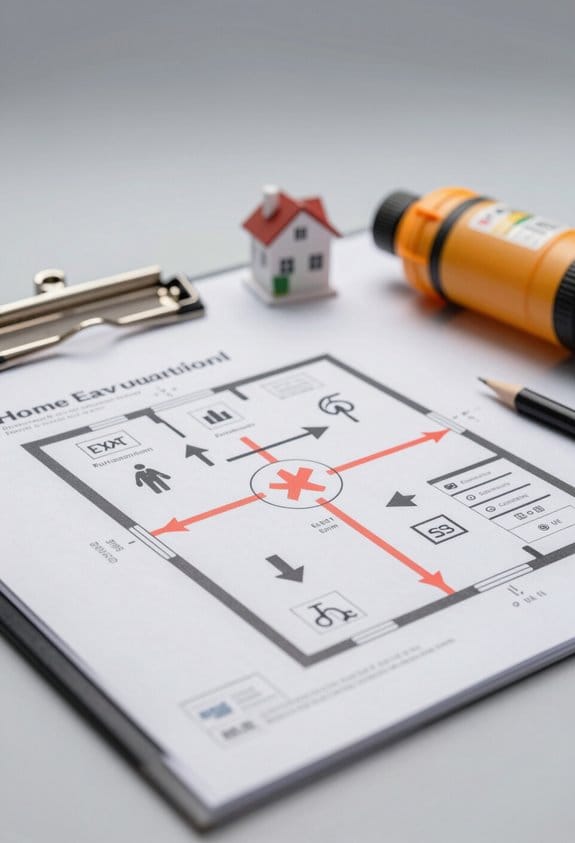
Have you ever thought about how prepared you are for a home emergency? It’s easy to overlook something like an evacuation plan until it’s too late. One way to get started is by drawing a detailed floor plan of your home. Make sure to mark all rooms, doors, and windows so everyone can see exit points clearly.
Next, think about escape routes from each room. Ideally, you should have at least two options, and they need to be kept clear of any clutter or obstacles. Also, pick a spot outside where everyone can meet once everyone has evacuated. This space should be safe and easily accessible.
It’s also wise to include the locations of smoke alarms and fire extinguishers on your map. That way, anyone can quickly find them if needed. Honestly, just having this map isn’t enough; it’s crucial to practice those escape routes regularly. Gather everyone in your household and go over the plan together. This kind of preparation can make all the difference when an emergency strikes.
Stay safe and prepared. Have you mapped out a plan for your home yet? It’s also important to prepare a survival kit to ensure you have essential supplies on hand during evacuation.
Best Practices for Conducting Fire Drills
Fire drills are so important for keeping our household prepared for a fire emergency. But have you ever really thought about how often you should run them? Aim for at least two times a year. Doing this will help you and your family remember the best escape routes from every room. And let’s be real, timing how fast you can get to your designated meeting spot is a great way to gauge your readiness. It can really shine a light on what you’re doing well and what might need some tweaking.
Make sure everyone gets involved during these drills. Think about assigning specific roles, especially for those who might need a little extra help, like young kids or family members with mobility challenges. And don’t forget to test your smoke alarms while you’re at it! Everyone should be able to recognize that sound since it plays a crucial part in keeping everyone safe.
After each drill, take the time to chat about what worked and what didn’t. This is your chance to fine-tune your plan. Keep a log of evacuation times; it’s a simple yet effective way to track your family’s progress over time. Additionally, ensuring that your alarms are part of an interconnected alarm system can significantly improve early warning and overall safety during an emergency.
How to Teach Children About Fire Safety
When it comes to fire emergencies, one question keeps popping up: Are your kids truly prepared? Teaching them about fire safety isn’t just helpful; it’s absolutely necessary. Start by explaining what smoke alarms sound like and make practicing home fire drills a regular thing. It’s crucial that they know to make a quick exit without hesitating when that alarm goes off.
Now, here’s a tip: Show them how to figure out two escape routes from every room, whether it’s through doors or windows. During an emergency, it’s also important they know to stay low and crawl under any smoke they encounter to find clear air. So, why does this matter? It could make all the difference in staying safe.
Reinforcing the habit of checking for heat on doors before opening them is another key step. Kids need to grasp that just because a door looks okay doesn’t mean it’s safe to open. Lastly, let them know they should never, under any circumstances, go back into a burning building. Their safety has to come first.
To further enhance safety, consider installing dual-sensing smoke detectors that provide reliable protection against both fast-flaming and slow-smoldering fires in your home.
In a nutshell, educating your kids about fire safety can save lives. Are you ready to take these steps with them? It’s a conversation worth having.
The Role of Smoke Alarms in Your Evacuation Plan
Have you ever thought about how quickly a fire can spread and the importance of smoke alarms? It’s a scary thought, but understanding their crucial role in our evacuation plan can make all the difference in an emergency.
You need smoke alarms installed in every sleeping room, on every level of your home, and right outside each sleeping area. It’s really critical to have them interconnected. This way, if one alarm goes off, they all sound together. Imagine the peace of mind knowing that you and your loved ones will be alerted immediately, giving you every chance to get out safely.
Don’t forget to test those alarms monthly. Seriously, it only takes a minute! And remember to replace the batteries every year to ensure they’re fully operational. The National Fire Protection Association notes that three out of five fire deaths happen in homes without working smoke alarms. So, why does this matter? If your alarm goes off, it’s not just a nuisance; it signals immediate action. That means it’s time to grab your family and escape while dialing the fire department.
Make it a household habit to discuss these procedures. Educating everyone about what to do in case of a fire can really improve your chances of a safe evacuation. Too often, people are caught unprepared because they don’t know how to react.
For maximum safety, consider alarms with dual-sensor technology that combine ionization and photoelectric sensors to detect both fast-flaming and smoldering fires effectively.
Helpful Resources for Home Fire Safety
We all want our homes to be safe, especially from fires. So, how can you make sure you and your loved ones are prepared? A good first step is to check out the U.S. Fire Administration’s website for solid fire safety tips. They offer guidance on creating effective fire escape plans that everyone in your household can follow.
One of the most critical things you can do is install smoke alarms in every bedroom and on every level of your home. These alarms can provide an early warning that might save lives. It’s also wise to conduct home fire drills at least twice a year. Honestly, practicing your evacuation routes helps everyone feel more at ease and know exactly what to do when the moment comes.
And don’t forget to designate a safe meeting place outside—this makes it easier to account for everyone. You might also want to reach out to your local fire department for advice on specific hazards in your area, which can help you fine-tune your fire escape plans for maximum safety.
Here’s the trick: familiarity with your escape routes can make a real difference when it comes to evacuation time. So, take the time to practice and ensure everyone knows the plan.
For enhanced protection, consider installing wired smoke alarms with battery backups to ensure continuous operation even during power outages.
Frequently Asked Questions
How Often Should I Update My Home Evacuation Plan?
We should update our home evacuation plan at least once a year, ensuring frequent updates align with plan testing, communication strategies, emergency contacts, and conducting evacuation drills to stay prepared for any situation.
What Should I Do if I Have a Pet During an Evacuation?
When evacuating with pets, we should create a pet evacuation checklist. Let’s pack emergency pet supplies, guarantee safe pet transportation, identify pet-friendly evacuation centers, and train our pets for emergencies beforehand to keep them calm.
How Can I Ensure Elderly Family Members Can Evacuate Safely?
We can’t underestimate our elderly family members’ mobility; it’s essential! Let’s guarantee safety drills are routine, use appropriate evacuation equipment, establish clear communication strategies, and keep emergency contacts updated for a smooth evacuation process.
What if My Home Has Multiple Floors or Levels?
When our home has multiple floors, we should implement multi-level strategies, ensuring stairway safety and accessible pathways. Regular emergency drills with clear room exit plans can help everyone evacuate efficiently and confidently in emergencies.
How Can I Involve Neighbors in My Evacuation Planning?
Together, let’s weave a safety net by organizing community meetings. We can share resources, compile emergency contacts, conduct group drills, and create a neighborhood map. Collaboration strengthens our planning and guarantees everyone’s prepared in an emergency.