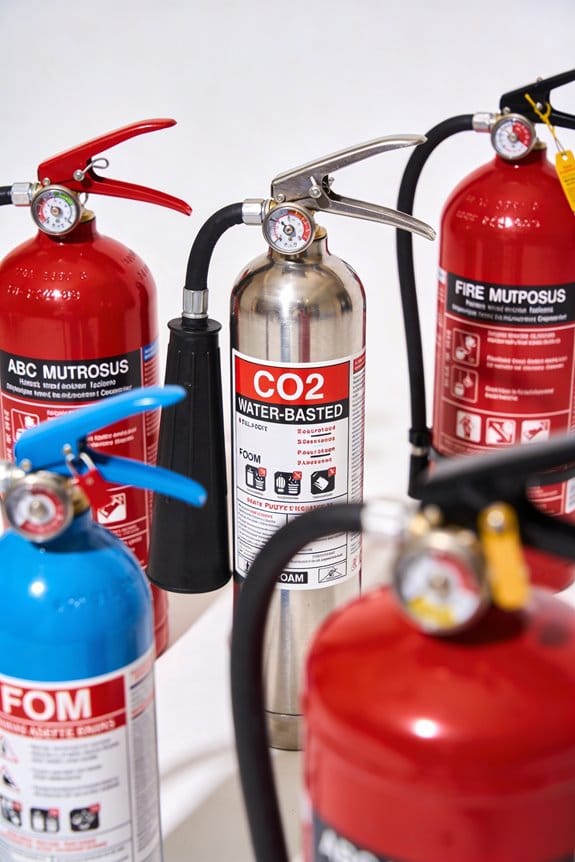

We recognize that knowing the different types of fire extinguishers is vital for safety. Class A extinguishers tackle flammable solids like wood and paper, while Class B is for liquids like gasoline. Class C is designed for electrical fires, and Class K handles cooking oils. Don’t forget Class D for combustible metals. Each type has specific usage techniques, and regular maintenance is essential. We’ve tested these methods, and next, we’ll share more about their proper operation and care.
Key Takeaways
- Class A extinguishers use water to combat fires involving wood, cloth, and paper, identified by a green triangle symbol.
- Class B extinguishers are designed for flammable liquids, utilizing dry chemicals to smother flames, marked by a red label with a black “B”.
- Class C extinguishers tackle electrical fires using non-conductive agents, ensuring safety from electric shock while preventing damage to electronics.
- Class K extinguishers are specifically for kitchen fires involving oils and fats, and require proper training for effective usage.
- Class D extinguishers are vital for combating combustible metal fires, employing specialized agents to suffocate flames safely.
Getting to Know Class A Fire Extinguishers: When and How to Use Them
When it comes to fire safety, you might be wondering how to handle different types of fires effectively. Class A fire extinguishers are essential for tackling fires that involve everyday materials like wood, cloth, and paper. They usually contain water as their main agent, which cools down those flames by absorbing heat. Knowing this could prove crucial in an emergency.
Pro Tips:
- First off, spot that green triangle symbol and look for the white color zone to make sure you’ve got a Class A fire extinguisher.
- When it’s time to use it, aim the nozzle right at the base of the fire and sweep side to side for full coverage.
- Don’t forget—the pressure gauge needs regular checks, and make sure the nozzle isn’t blocked.
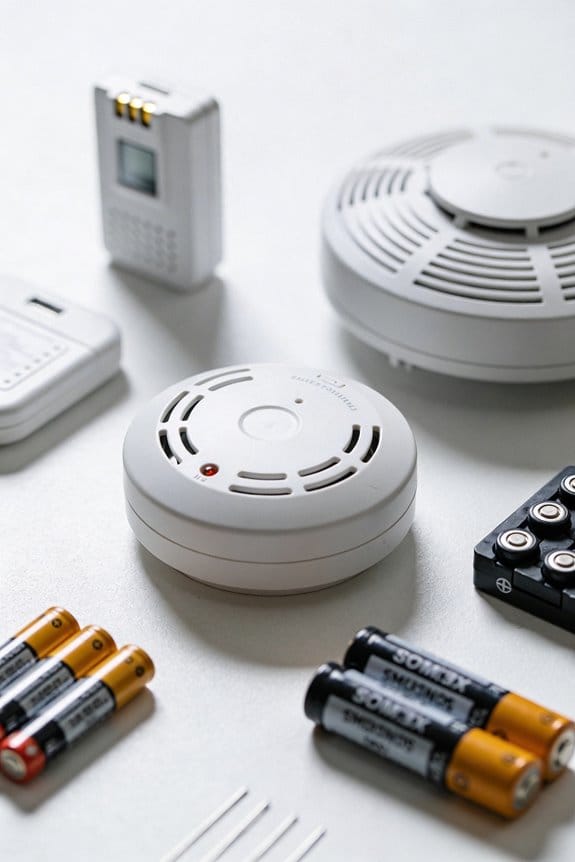
Truth is, being prepared for fire emergencies is something we all need to consider seriously. What’s your plan when faced with a fire? To enhance safety, consider using fire detection devices with photoelectric sensors to detect slow-burning fires early alongside your extinguisher preparations.
The Role of Class B Fire Extinguishers: How to Handle Flammable Liquid Fires
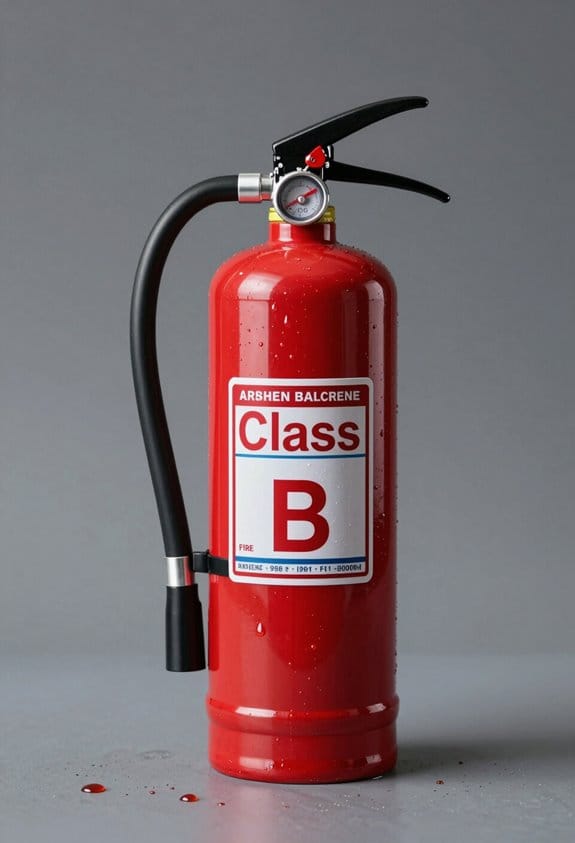
Imagine you’re in the kitchen, and suddenly, a grease fire breaks out. It’s scary, right? That’s where Class B fire extinguishers come into play. These bad boys are made specifically for tackling blazes caused by flammable liquids like grease, gasoline, and oil. The cool thing is they use dry chemical agents, like sodium bicarbonate, to smother the flames and keep them from coming back.
Now, when you find yourself facing a Class B fire, here’s a tip: aim low at the base of the flames. Why? Because doing so helps smother the fire at its source rather than splashing more fuel around.
Pro Tips:
- Look out for Class B extinguishers that have a red label with a black “B” – that’s your indicator.
- Don’t forget to check the pressure gauge regularly and make sure it’s easy to grab whenever you store flammable liquids.
Honestly, knowing how to use a Class B fire extinguisher can really make a difference in your safety. It’s important to stay prepared. After all, nobody wants a fire to escalate because of a simple mistake. So, are you ready to take a proactive approach to fire safety? Having regular inspection frequency and maintenance ensures your extinguisher will work effectively when needed.
Why Class C Fire Extinguishers Are Critical for Electrical Equipment?
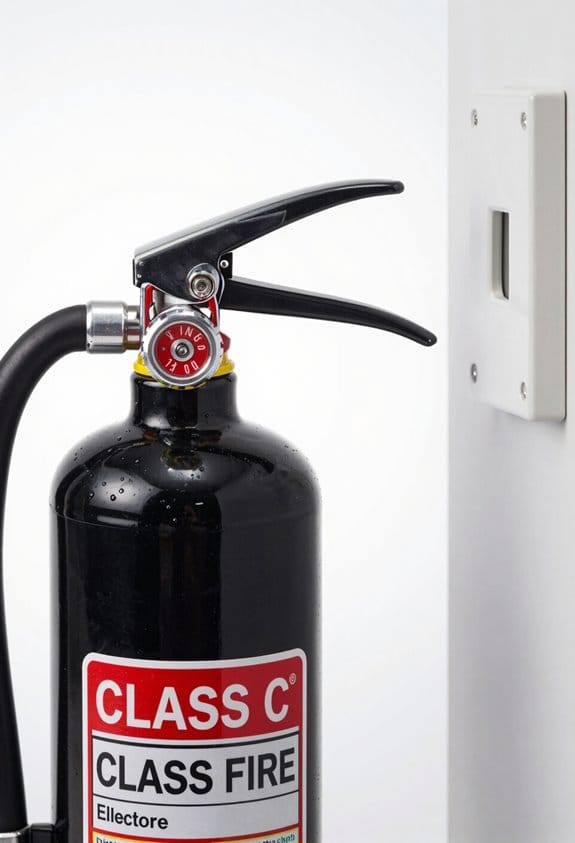
Ever thought about what could happen if a fire breaks out due to an electrical appliance? We often take these handy devices for granted, but they can be a serious fire risk if something goes wrong. That’s why having a Class C fire extinguisher on hand is so important. These extinguishers are specially made for electrical fires and use non-conductive agents like carbon dioxide or dry chemicals. So, if you’ve got energized electrical equipment around, they’re a must-have.
Let’s dive into some key features of Class C extinguishers.
- Safety First: The best part is they help you stay safe by minimizing the risk of electric shock while you’re putting out a fire.
- No Mess Left Behind: You won’t have to worry about cleaning up harmful residues that can damage your electronics. That means less hassle!
- Stay Prepared: It’s crucial to keep them accessible and make sure they’re well-maintained. You want them ready for action in an emergency.
It’s also essential to ensure that your fire safety equipment meets compliance and certification standards to guarantee reliability during emergencies.
So, why does this matter? Imagine having an electrical fire break out, and you don’t have the right extinguisher. It could lead to dire consequences.
Honestly, keeping a Class C extinguisher in places like your home office or workshop is a smart move. It’s just one step you can take to ensure you’re prepared for the unexpected.
In short, investing in a Class C fire extinguisher is about safety and protection. What steps are you taking to protect your space from potential fire hazards?
Using Class K Fire Extinguishers in Kitchen Safety: Essential Usage Tips
Cooking can be a real joy, but it can also be a fire hazard, especially with all those oils and fats flying around in the kitchen. That’s where Class K fire extinguishers come into play. They’re specifically made for those pesky fires caused by cooking oils, so knowing how to use one is essential.
So, how do you handle it if disaster strikes? Here’s a simple technique to remember:
- Pull the pin
- Aim low at the base of the fire
- Squeeze the lever
- Sweep from side to side
Taking the time to train everyone in the kitchen on this technique can make a huge difference. You don’t want to be fumbling around when a fire starts. Regular fire extinguisher training should be a part of your routine, and it’s just as important to check those extinguishers monthly.
Honestly, when was the last time you looked at your fire extinguishers? It’s vital to keep up with local guidelines for maintenance, including hydrostatic testing. Knowing your equipment and how to use it can change the game when it comes to kitchen safety.
In short, be proactive about kitchen fire safety. Having the right tools and knowledge can prevent a small crisis from turning into a big disaster. Are you ready to take your kitchen safety to the next level? Remember that having systems with high-visibility strobes can greatly enhance alert effectiveness during emergencies.
Specialized Uses of Class D Fire Extinguishers for Combustible Metals
When it comes to fires involving combustible metals, knowing how to use Class D fire extinguishers effectively can be a real lifesaver. Ever faced a fire that water just can’t touch? That’s when you need these extinguishers, especially for metals like magnesium, lithium, and sodium.
Class D fire extinguishers aren’t your run-of-the-mill types. They use special agents like sodium chloride or graphite to suffocate the flames and restrict oxygen. It’s crucial to remember that using the wrong method can lead to some serious issues, such as explosions or the spread of molten metal. These extinguishers are mostly found in industrial places like metal fabrication plants, so getting proper training for their use is a must.
So, how can you stay safe? The best part is to always check the right extinguishing agent for the specific metal you’re dealing with. It can make all the difference in a tense moment.
Additionally, integrating fire safety devices with smart home security systems can help provide real-time alerts and improve overall emergency response.
To recap, knowing the proper use of Class D extinguishers is vital for safety when handling fires from combustible metals. Do you have a plan in place for fire emergencies?
How to Maintain Your Fire Extinguishers for Optimal Readiness
How to Maintain Your Fire Extinguishers for Optimal Readiness
Have you ever thought about what would happen if a fire broke out in your home? It’s a scary thought, but having reliable fire extinguishers can make a big difference in keeping you and your loved ones safe. To ensure those extinguishers are up for the job when you need them, regular maintenance is a must. Here are some practical tips to keep in mind:
First off, you want your extinguishers to be easy to get to. Imagine reaching for one only to find it buried behind a piece of furniture that you can’t move. Yikes! Keep the area around them clear so you can grab them quickly in an emergency.
Next, let’s talk about the pressure gauge. You should check it regularly; the needle ought to sit in the green zone. If it strays into the red, that could mean it’s time for a refill or replacement.
Don’t forget to give your extinguishers a good once-over. Look for rust, dents, or any signs of leaks. These issues could compromise how well they work when needed.
And while you’re at it, do a little cleaning. A simple wipe-down of the outside goes a long way. Dust or grease can make it hard to read labels, and we all know that in a stressful situation, you don’t want to be fumbling with unclear instructions.
Lastly, follow the manufacturer’s guidelines. Trust me; these folks know their product. Stay on top of hydrostatic testing, and if you have dry chemical extinguishers, give them a good shake monthly to keep the chemicals from settling.
Additionally, consider installing interconnected alarms alongside your extinguishers for early fire detection to improve overall safety during emergencies.
Frequently Asked Questions
What Are the 5 Types of Fire Extinguishers and Their Uses?
In our quest for fire safety measures, we’ve got five extinguishers: Class A for ordinary combustibles, Class B for flammable liquids, Class C for electrical fires, Class D for metals, and Class K for cooking oils. Regular maintenance and workplace training are key!
What Are the 4 Classification of Fire Extinguishers?
There are four classifications of fire extinguishers: A, B, C, and D. We should focus on fire prevention methods, guarantee extinguisher maintenance, and participate in fire safety training to be prepared for emergencies effectively.
How Do I Know Which Fire Extinguisher to Use?
Like a well-prepared ship steering through stormy seas, we must assess fire safety first. By knowing the fire class, checking extinguisher maintenance, and planning for emergencies, we’ll always be ready to act decisively.
What Are the 5 Types of Fire Extinguishers and Their Colors?
There are five fire extinguisher types: Class A (white), B (blue), C (red), D (yellow), and K (black). For fire extinguisher maintenance, color coding’s significance is crucial, so let’s focus on identification training tips together.